
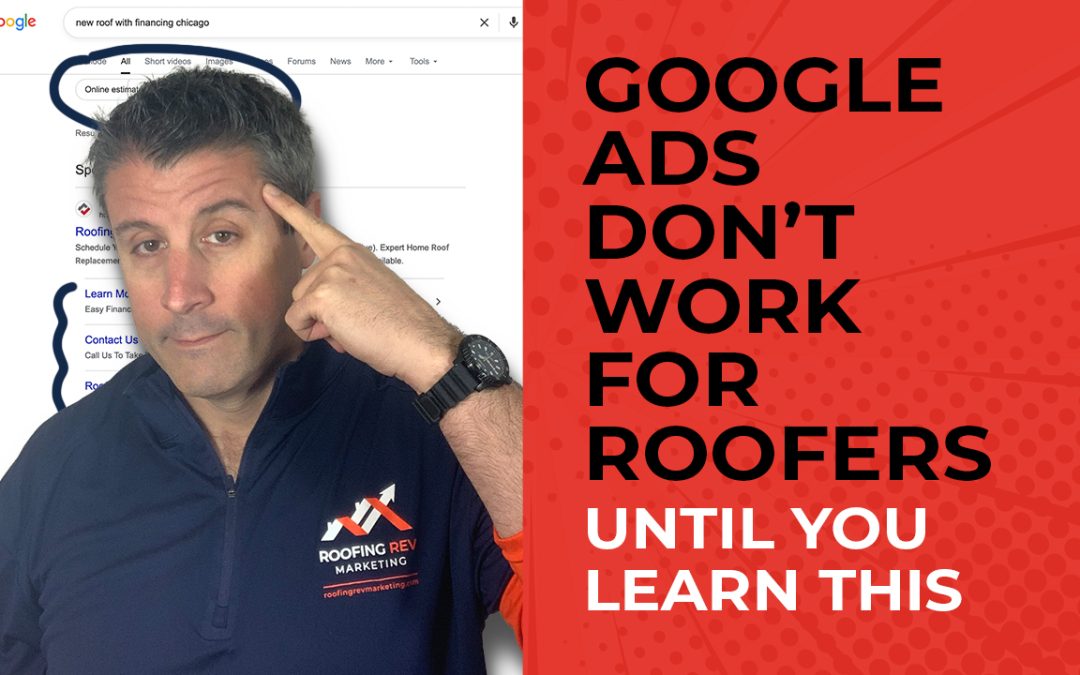
Google Search Ads play a different role for roofing companies in 2026 than they did even a year ago. They are no longer just ads — they are part of the decision environment homeowners and property managers use to choose who they trust before ever clicking a website.
Google Search is now a blended results page made up of AI summaries, Google Maps, Local Service Ads, paid search ads, reviews, and organic listings all appearing at once. Buyers form opinions quickly, filter aggressively, and contact fewer companies.
That means roofing Google Ads only work when they align with how buyers actually search, evaluate risk, and make decisions — not when campaigns are built around generic keywords or volume alone.
Executive Summary: Google Search Ads still work for roofing companies in 2026, but only when campaigns are built around buyer intent instead of keywords. Residential and commercial roofing searches behave differently, require different structures, and must be measured by different success metrics. This guide explains which Google Ads campaigns actually work, real cost and close-rate benchmarks, how to reduce wasted spend, and how roofing companies should evaluate performance moving forward.
Table of Contents
- Why Google Search Ads Still Matter in 2026
- How Residential and Commercial Roofing Buyers Search Differently
- The 4 Google Ads Campaign Types That Work
- Intent-Based Google Ads Structure
- City-Based vs Territory-Based Campaigns
- Website Pages vs Landing Pages
- Google Ad Extensions That Improve Lead Quality
- Google Ads Cost: CPL & CAC
- How to Reduce Wasted Ad Spend
- Which Google Ad Types Work Best
- How Buyers Control the Ads They See
- ChatGPT Ads & the Future of Roofing Advertising
- How This Fits Into Total Google Domination
- Key Takeaways
- FAQs
Why Google Search Ads Still Matter for Roofing Companies in 2026
Google Search Ads still matter for one reason:
They show up at the exact moment responsibility hits.
That moment looks different depending on who is searching:
- A homeowner realizes water is coming through the ceiling
- A property manager realizes a flat roof issue could impact tenants
- A business owner realizes a roof replacement affects budgeting
Search Ads capture these moments better than almost any other channel. Not because they are flashy, but because they are timely.
Google Search Ads are not about more traffic. They are about intercepting decisions already in progress.
How Residential and Commercial Roofing Buyers Search Differently
Residential roofing searches are driven by urgency and emotion, while commercial roofing searches are driven by responsibility, risk, and planning.
Residential Roofing Buyer Behavior
Residential buyers are problem-driven. They search when something leaks, breaks, or can’t wait.
These searches are emotional, urgent, and often insurance-driven. Residential buyers decide quickly, contact only a few companies, and care deeply about response speed.
The Golden Nugget
If the response is slow, the job is usually gone.
Commercial Roofing Buyer Behavior
Commercial roofing buyers are rarely reacting to emergencies alone; they are managing assets, budgets, and long-term risk.
Commercial buyers research longer, involve multiple stakeholders, and evaluate capability over price.
The 4 Google Ads Campaign Types That Work for Roofers
The most effective Google Ads campaigns for roofers are built around buyer situations, not generic keywords.
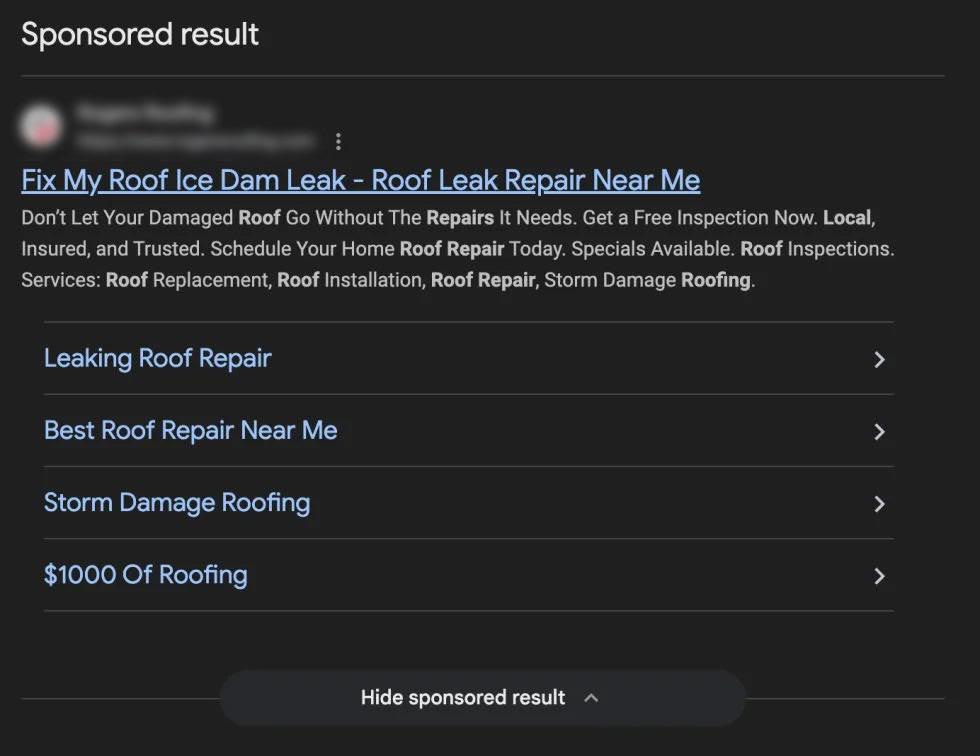
1. Emergency & Storm Damage Campaigns (Residential)
Emergency roofing ads perform best when calls are answered immediately, because homeowners typically contact multiple roofers and choose the first credible responder.
Example:
Headline ideas
- Roof Leak? We Can Be There Today
- Storm Damage Roof Repair
- Emergency Roofing & Tarping – Call Now
Description
- Roof leaking after a storm? Fast local response. We handle emergency repairs and insurance-related roof damage. Call now for immediate help.
The Golden Nugget
Emergency PPC campaigns win or lose based on response speed, not ad copy. If the click waits, the job is gone.
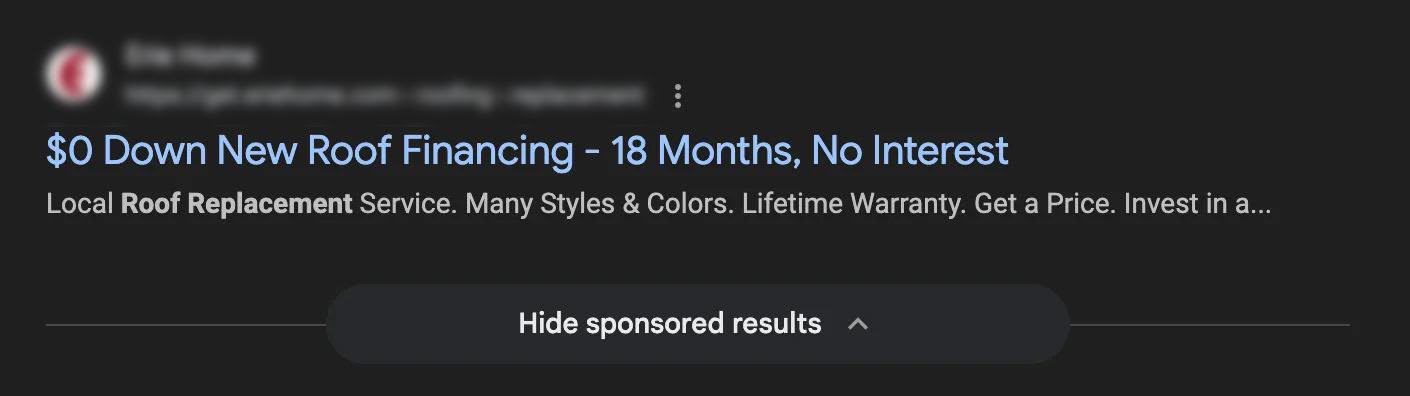
2. Roof Replacement With Financing (Residential)
Financing-focused roofing ads reduce decision friction by shifting the buyer’s focus from total cost to monthly affordability.
Example:
Headline ideas
- Roof Replacement As Low As $149/Month
- New Roof With No Interest Financing
- Replace Your Roof With $0 Down
Description
- Need a new roof but concerned about cost? Flexible financing options available. Get a professional inspection and clear replacement options today.
The Golden Nugget
Monthly payment framing converts better than full price framing.
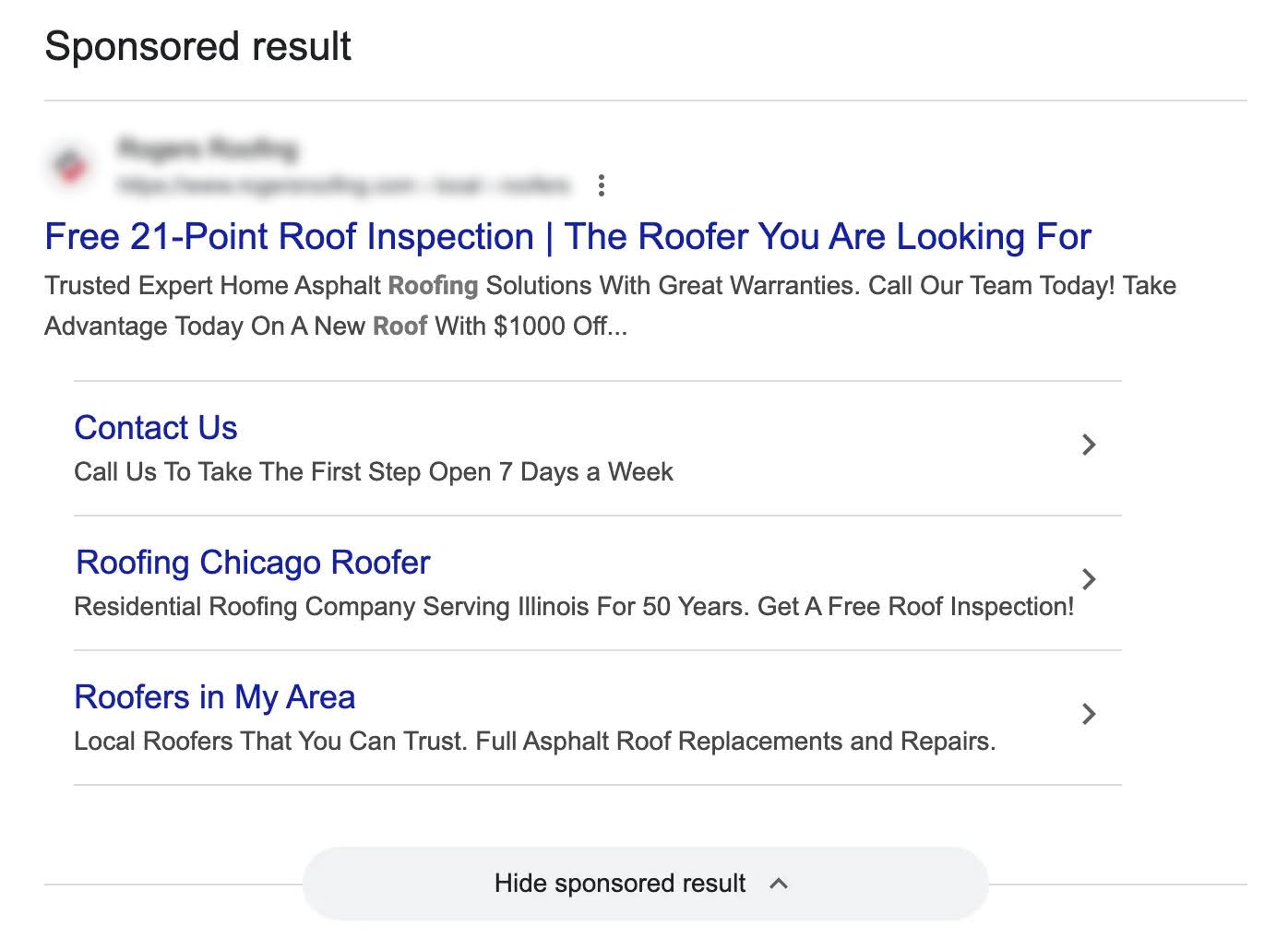
3. Inspections & Preventative Searches (Residential + Light Commercial)
Inspection-related roofing searches indicate early-stage intent and should be measured by future conversion value, not immediate sales.
Example:
Headline ideas
- Free 21-Point Roof Inspection
- Is Your Roof Still in Good Shape?
- Roof Inspection with Sameday Estimate
Description
- Not sure if your roof can be repaired or needs a full replacement? Get a professional roof inspection and honest recommendations from experienced local roofers.
The Golden Nugget
Inspection traffic should be treated as pipeline development, not revenue.
4. Commercial Replacement, Maintenance & Compliance
Commercial roofing Google Ads succeed when they emphasize capability, process, and experience instead of urgency-based messaging.
Example:
Headline ideas
- Commercial Roofing Specialist
- Flat Roof Replacement – 25-Year Guarantee
- Commercial Roof Maintenance Programs
Description
- Experienced commercial roofing contractor for repairs, replacements, and maintenance. Serving property managers and business owners with proven systems and accountability.
The Golden Nugget
Commercial PPC fails when it is treated like residential lead generation.
Intent-Based Google Ads Structure for Residential vs Commercial Roofing
Most roofing ad accounts fail because emergency, planning, and commercial searches are lumped together.
High-performing accounts separate buyer type, buyer situation, and buyer timeline. When intent is respected, Google rewards relevance.
City-Based vs Territory-Based Google Ads Campaigns
Residential: City-specific campaigns increase relevance and lower cost per click.
Commercial: Territory-based campaigns work better because decision-makers often search from offices, not rooftops.
Website Pages vs Landing Pages for Roofing PPC
Website service and area pages build long-term authority, support SEO, and improve Quality Score.
Landing pages simplify tracking but provide no SEO value since they are hidden from search indexing.
For roofers focused on long-term growth, indexable service and area pages outperform isolated landing pages when built correctly.
Google Ad Extensions That Improve Roofing Lead Quality
Ad extensions don’t just increase clicks. They pre-qualify buyers.
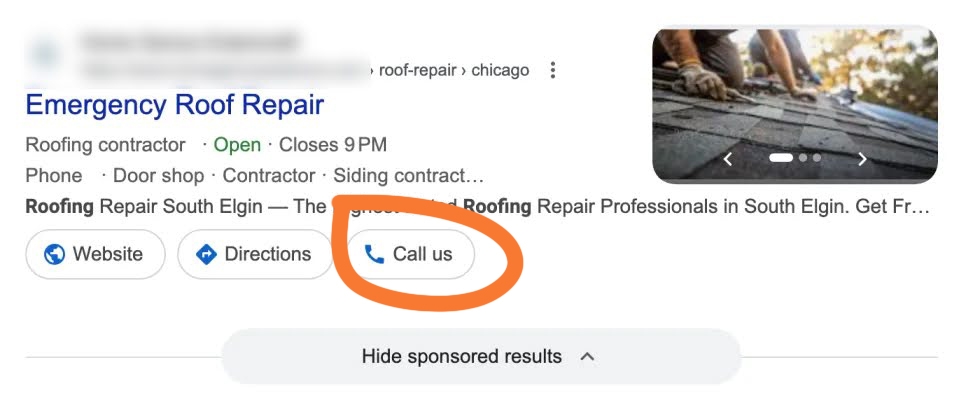
Call Extensions (Speed + Seriousness Filter)
Call extensions place your phone number directly in the ad, allowing searchers to call without clicking your website.
These are especially useful for:
- Emergency and storm damage searches
- High-intent residential buyers
- Property managers dealing with active issues
The Golden Nugget
Schedule call extensions to show only during hours when a real person answers. Unanswered calls turn high-intent clicks into wasted spend.
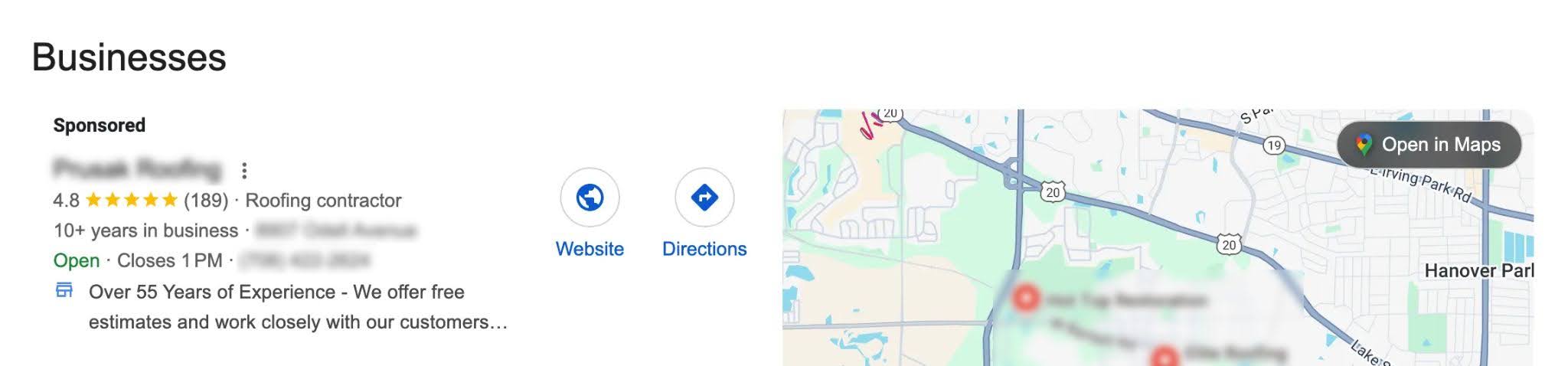
Location Extensions (Legitimacy + Proximity Filter)
Location extensions show your business address and connect ads directly to your Google Business Profile.
These are especially useful for:
- Residential roofing searches
- Local repair and replacement jobs
- Commercial buyers who want proven local contractors
The Golden Nugget
Keep your location targeting tight. If your ads target one area but your GBP footprint suggests another, you’ll attract the wrong clicks.
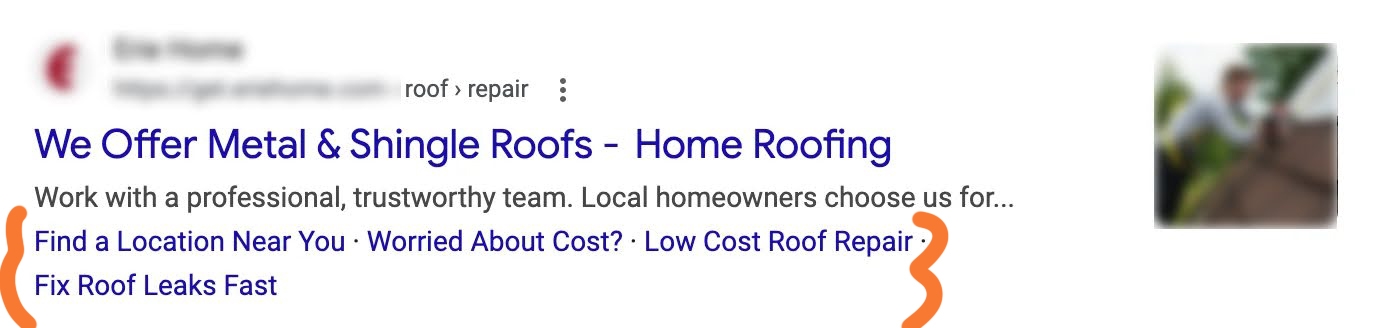
Service & Capability Sitelinks (Intent Sorting)
Sitelinks let you send searchers to specific pages or sections instead of your homepage. For roofing companies, sitelinks should be intent-based.
Examples:
- Emergency Roof Repair
- Roof Replacement With Financing
- Commercial Roofing Services
- Roof Inspections
The Golden Nugget
Use different sitelinks for residential and commercial campaigns. One set of sitelinks can’t speak to both buyer types without hurting relevance.
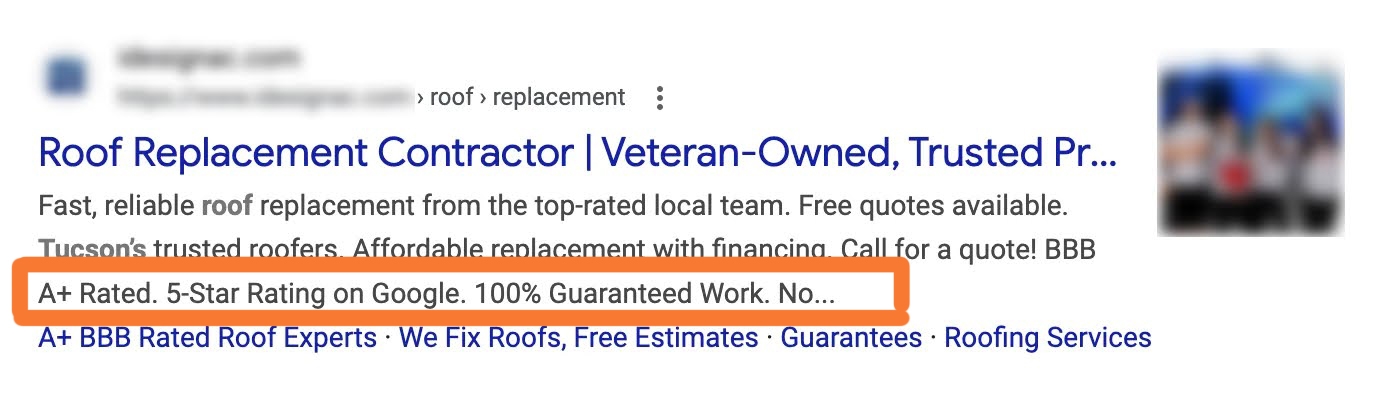
Capability Callouts (Advanced Lead Quality Lever)
Capability callouts help filter commercial leads by signaling professionalism and reducing perceived risk before the click.
Examples:
- Licensed & Insured
- Flat Roof Specialists
- Maintenance Programs Available
- Serving Property Managers
The Golden Nugget
For commercial roofing, capability callouts beat discount messaging. Decision-makers want lower risk, not lower price.
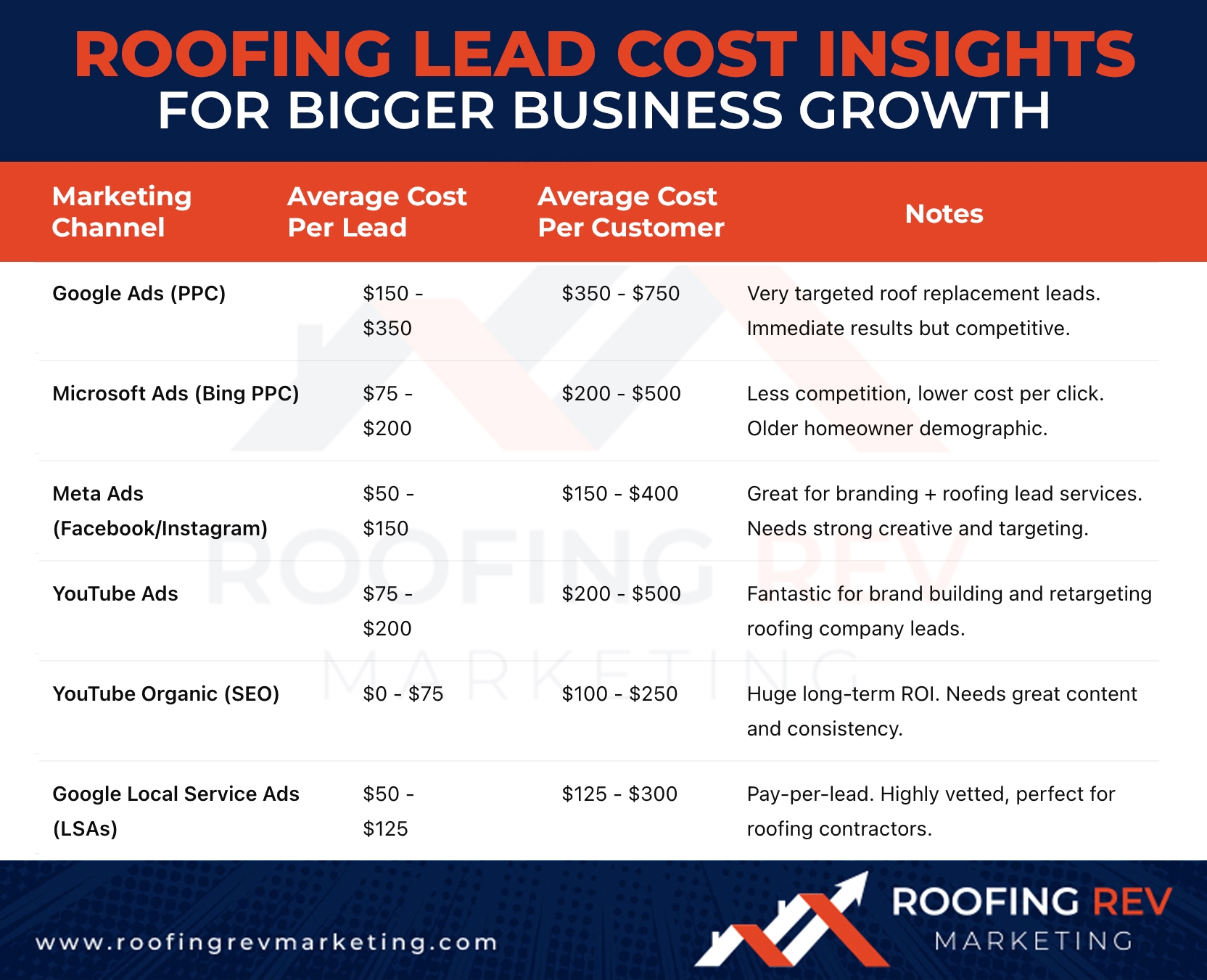
Google Ads Cost for Roofers: Cost Per Lead and Cost Per Customer
In 2026, Google Ads performance must be evaluated differently for residential and commercial roofing. While both use the same platform, the economics and expectations are not the same.
Residential Roofing: Cost Per Lead & Cost Per Customer
Residential roofing Google Ads are typically judged on speed, volume, and close rate.
2026 Residential Benchmarks:
- Average Cost per Lead (CPL): $150–$350
- Average Cost per Customer (CAC): $350–$750
- Average Close Rate: 20%-25%
- Average Sales Cycle: Days to weeks
Residential campaigns work best when response time is fast and follow-up is consistent. Because deal sizes are smaller, efficiency and close rate matter more than long-term pipeline value.
Commercial Roofing Rule of Thumb (2026)
Commercial Google Ads should not be evaluated by cost per lead alone.
A more reliable rule of thumb is:
Measure commercial PPC by pipeline value created, not leads generated.
In practice, this means asking:
- How much qualified opportunity did this campaign create?
- How many of these conversations progressed to estimates, bids, or proposals?
- What is the realistic contract value of those opportunities?
Some commercial roofing companies use a percentage of gross or net job value as a benchmark, but this can be misleading. Commercial roofing margins, timelines, and scopes vary too widely for a single percentage to be reliable.
A healthier approach:
- Expect higher CPL than residential
- Accept longer sales cycles
- Judge success by deal size potential, not volume
- Average Close Rate: 8%-12%
If one commercial lead turns into a $150,000–$500,000 project, the math works very differently than residential—even if that lead cost significantly more to acquire.
For a deeper breakdown of real-world benchmarks, see our full analysis of the real cost per lead and cost per customer for roofing companies.
The Golden Nugget (Commercial PPC Metrics)
Commercial PPC should be judged on pipeline value, not lead volume. A single qualified opportunity can justify months of ad spend.
How To Reduce Wasted Google Ads Spend
Most wasted roofing ad spend comes from poor filtering, not insufficient budget.
When roofing Google Ads underperform, the first reaction is usually to blame bids, daily budget, or competition. In reality, wasted spend almost always comes from letting the wrong searches, locations, or users into the account.
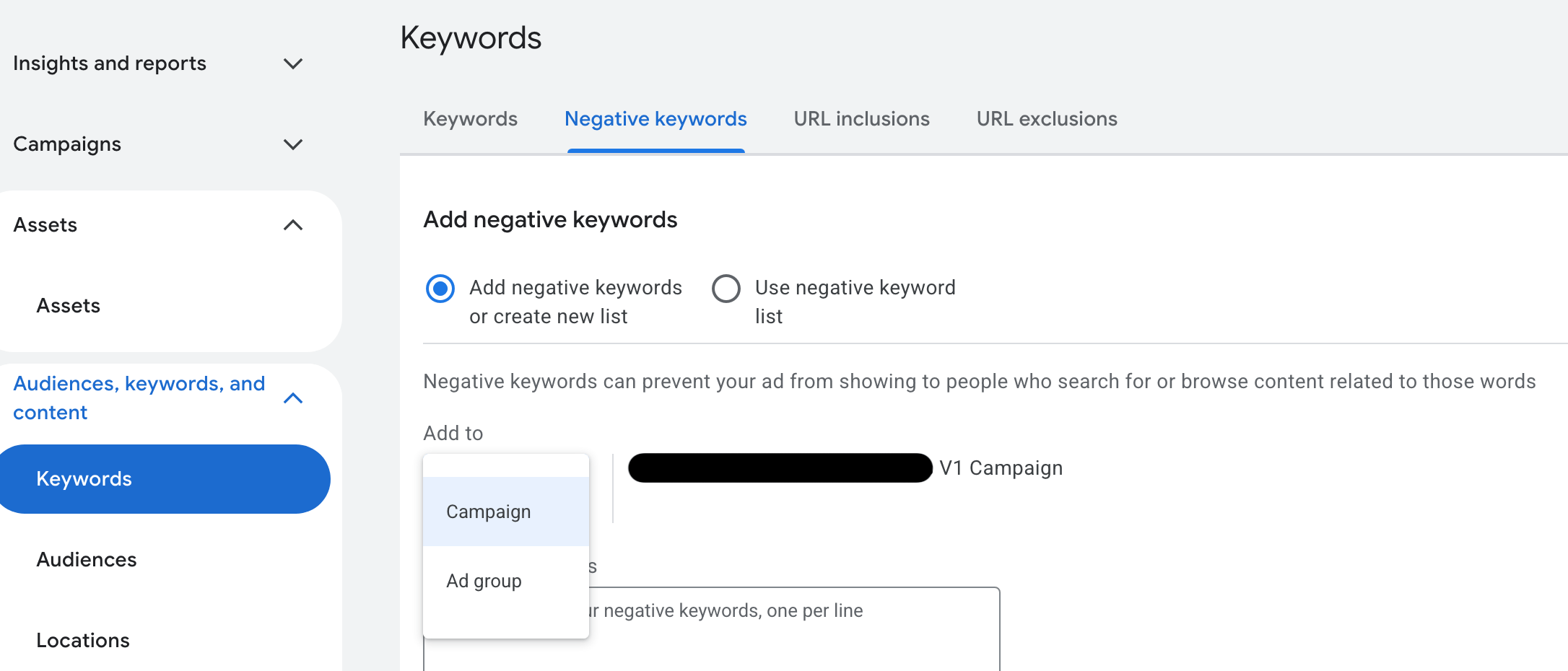
Negative Keyword Lists (The First Line of Defense)
Negative keywords prevent your ads from showing for searches that will never turn into real roofing jobs.
Common wasted spend comes from searches related to:
- DIY or how-to roofing searches
- Jobs, careers, or training
- Materials-only intent (shingles, metal panels, tools)
- Non-service searches with no buying intent
- Different brands (see Name Confusion Protection & Brand Collision Control below for details)
Strong roofing ad accounts maintain large, evolving negative keyword lists (at the Ad Group, Campaign, AND Account levels) that are reviewed regularly, not set once and forgotten.
- Create a negative keyword list at the Account level to exclude all five of the bullet categories above.
- Create a negative keyword list at the Campaign level to exclude services and areas that you are not targeting within that specific campaign.
- Create a negative keyword list at the Ad Group level to exclude overlapping intent, so each ad group owns one buyer situation and nothing else.
The Golden Nugget
If a search cannot realistically turn into a booked inspection or estimate, it should never trigger your ad.
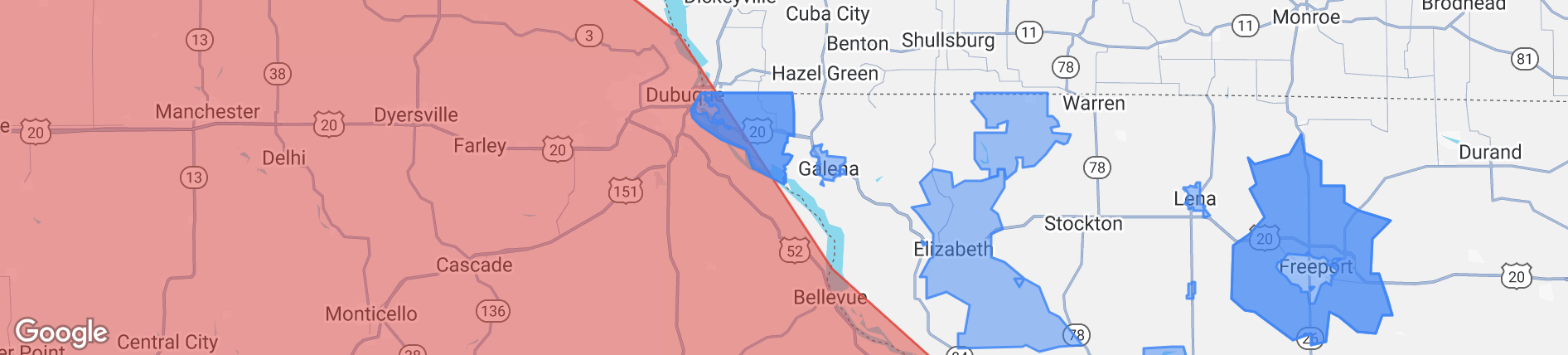
City and State Exclusions (Geographic Control)
City and state exclusions are critical for roofing companies, especially those running multiple locations or broader service areas.
Without exclusions, ads can appear for:
- Nearby cities you do not serve
- Bordering states outside your licensing area
- Users searching from outside your true service footprint
- Overlapping location targeting making your ads compete against themselves, inflates cost per click, and confuses Google’s algorithm.
This problem becomes more expensive when using automated campaign types like Performance Max.
The Golden Nugget
Exclude cities and states you will never service or that compete against yourself in another campaign, even if they seem close enough or far enough away on a map. Especially with PMAX campaigns!
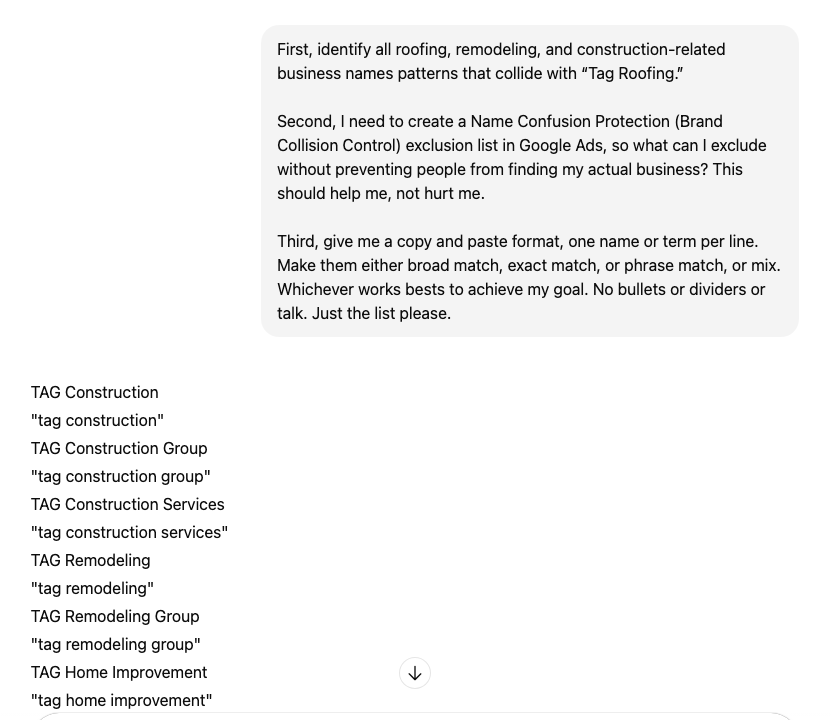
Name Confusion Protection (Brand Collision Control)
Name confusion is one of the most overlooked sources of wasted roofing ad spend.
This often happens when your company name is similar to another roofer, contractor, or random company in a different market. Basically, if someone was clearly trying to reach another company, you should not be paying for that click.
Common causes include:
- Generic company names
- Shared last names
- Similar branding across regions
Protecting against this requires ongoing search term monitoring and intentional brand separation.
The Golden Nugget
Use this Prompt in any AI platform such as ChatGPT, Gemini, etc to get the result in my picture above. Then, you will have to make a judgment call on which to keep or remove from that generated list.
First, identify all roofing, remodeling, and construction-related business names patterns that collide with “Tag Roofing.”
Second, I need to create a Name Confusion Protection (Brand Collision Control) exclusion list in Google Ads, so what can I exclude without preventing people from finding my actual business? This should help me, not hurt me.
Third, give me a copy and paste format, one name or term per line. Make them either broad match, exact match, or phrase match, or mix. Whichever works bests to achieve my goal. No bullets or dividers or talk. Just the list please.
Controlled PMAX Usage (Automation With Guardrails)
Performance Max can be useful for roofing companies, but only when it is tightly controlled.
Unrestricted PMAX campaigns often:
- Blur residential and commercial intent
- Send traffic to low-quality placements
- Spend budget where lead quality is unclear
PMAX works best when used to support—not replace—intent-based search campaigns.
The Golden Nugget
PMAX should never replace intent-based search campaigns. It should only support them.
Roofing companies that control wasted spend don’t necessarily spend less. They spend more deliberately.
Which Google Ad Types Work Best for Roofing Companies
| Ad Type | Residential | Commercial |
|---|---|---|
| Search | Core | Core |
| Map Ads | Strong | Situational |
| PMAX | Controlled | Controlled |
| Display | No | No |
| YouTube | Branding | Branding |
How Homeowners and Property Managers Control the Ads They See
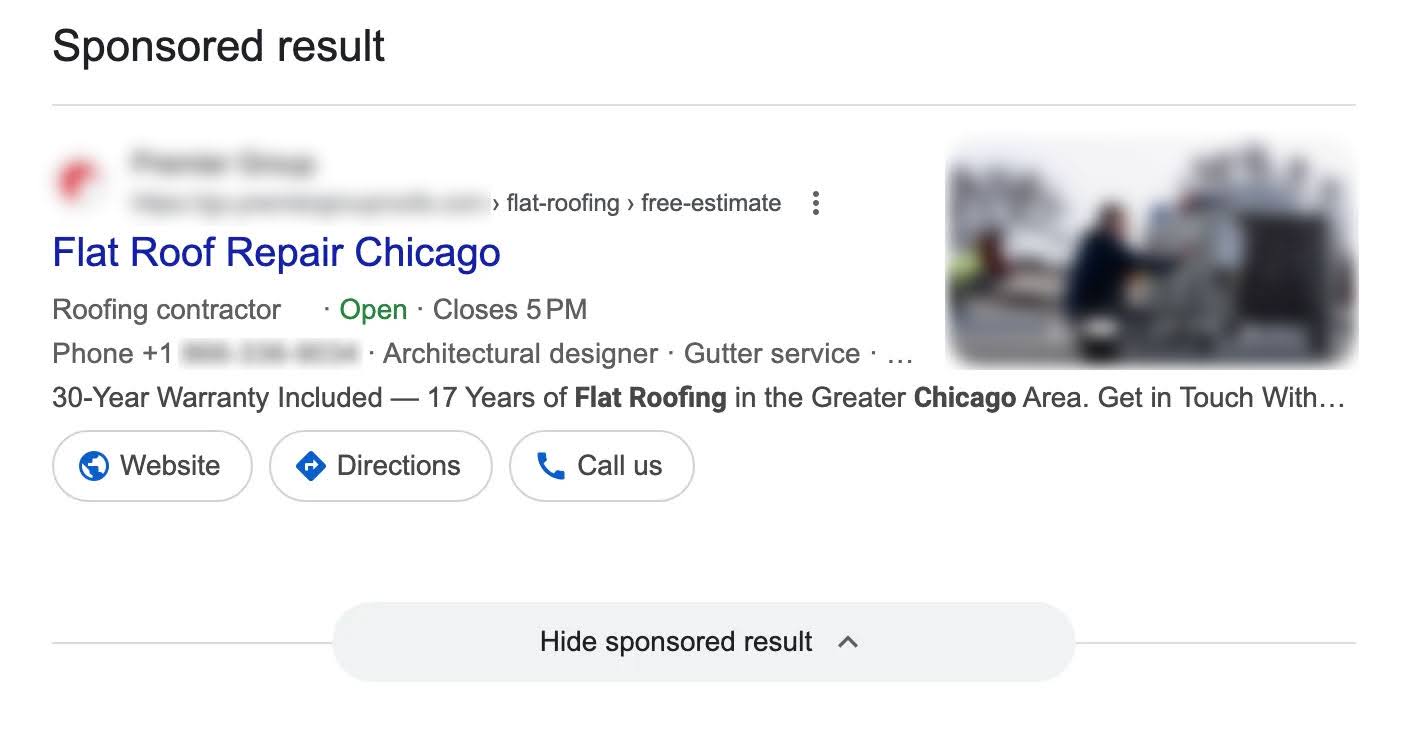
Buyers can now hide or ignore sponsored results they find irrelevant (as seen in multiple roofing company Google Search Ad examples above).
Poorly aligned ads don’t just underperform — they disappear.
More on this shift:
Google search updates for hiding sponsored ads.
ChatGPT Ads and the Future of Roofing Advertising
ChatGPT ads represent answer-based advertising, where recommendations appear inside AI-generated responses rather than traditional search listings.
Residential buyers ask, “Who can help me now?”
Commercial buyers ask, “Who is qualified to handle this?”
Authority alignment will matter more than copywriting.
Follow us for more on this topic as it unfolds live in 2026!
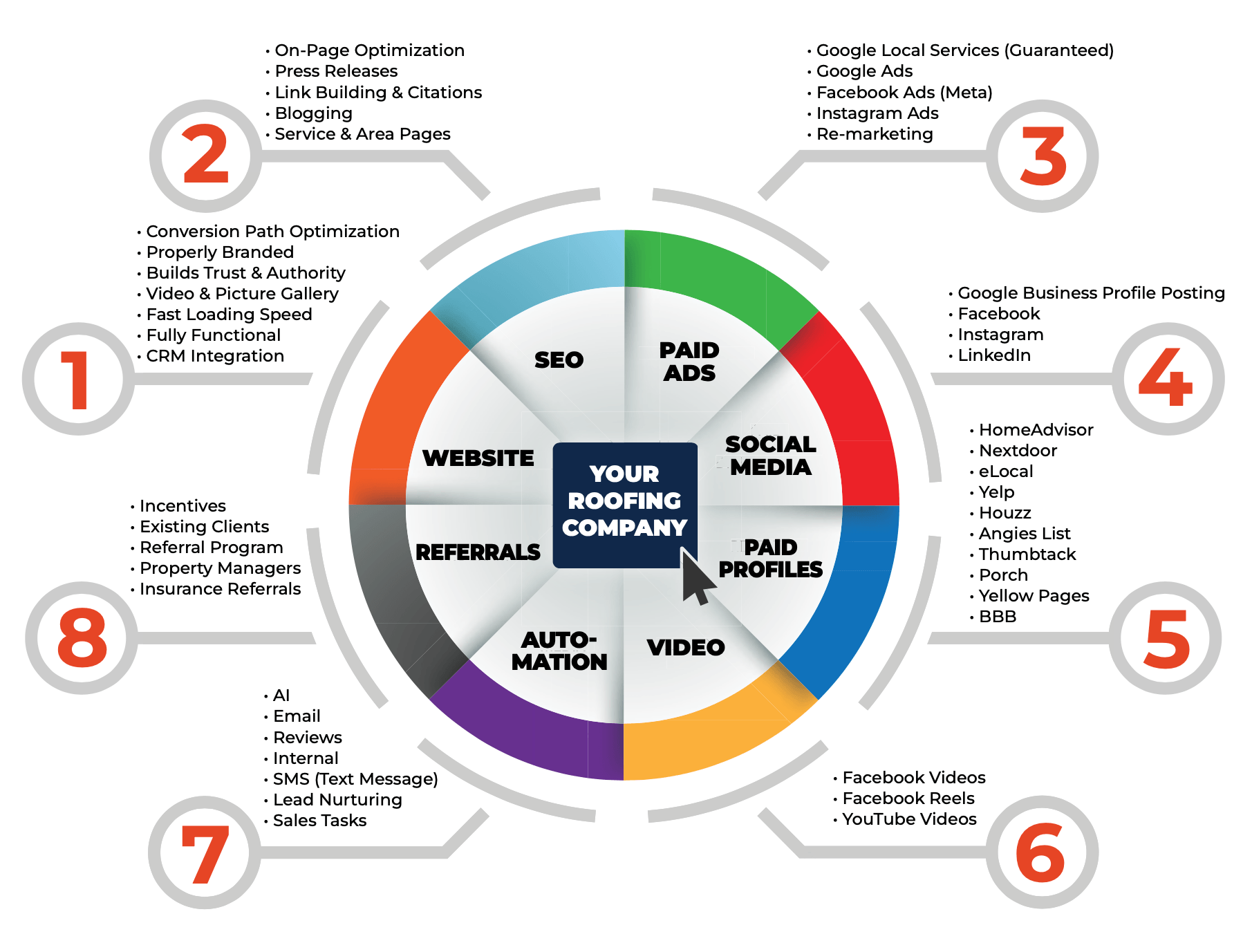
How Google Search Ads Fit Into Total Google Domination
Search Ads reinforce Maps, Local Service Ads, organic rankings, and AI summaries.
This works best when aligned with a broader system like Total Google Domination for Roofers.
Key Takeaways
- Residential: Speed wins. Intent beats volume. Financing framing matters.
- Commercial: Authority matters. Capability beats urgency. Quality conversations win.
Frequently Asked Questions About Google Ads for Roofers
Are Google Ads worth it for roofers in 2026?
Yes, when campaigns are structured around buyer intent, filtered correctly, and supported by fast response and follow-up. Residential and commercial campaigns must be evaluated differently to be effective.
Are Google Ads effective for commercial roofing?
Yes, when measured on pipeline value instead of raw lead volume.
Should roofers use landing pages or website pages?
Website service and area pages outperform long-term when built correctly.
Will AI replace Google Ads?
No. AI just changes how authority and relevance are rewarded.
What is a good close rate for roofing Google Ads?
Nationwide, residential roofing Google Ads typically close between 20–25%, while commercial roofing campaigns often close between 8–12%. Lower commercial close rates are normal due to longer sales cycles and larger deal sizes.
What causes wasted spend in roofing Google Ads?
Most wasted spend comes from poor filtering, not budget size. Missing negative keywords, loose location targeting, name confusion, and uncontrolled automated campaigns are the most common causes.
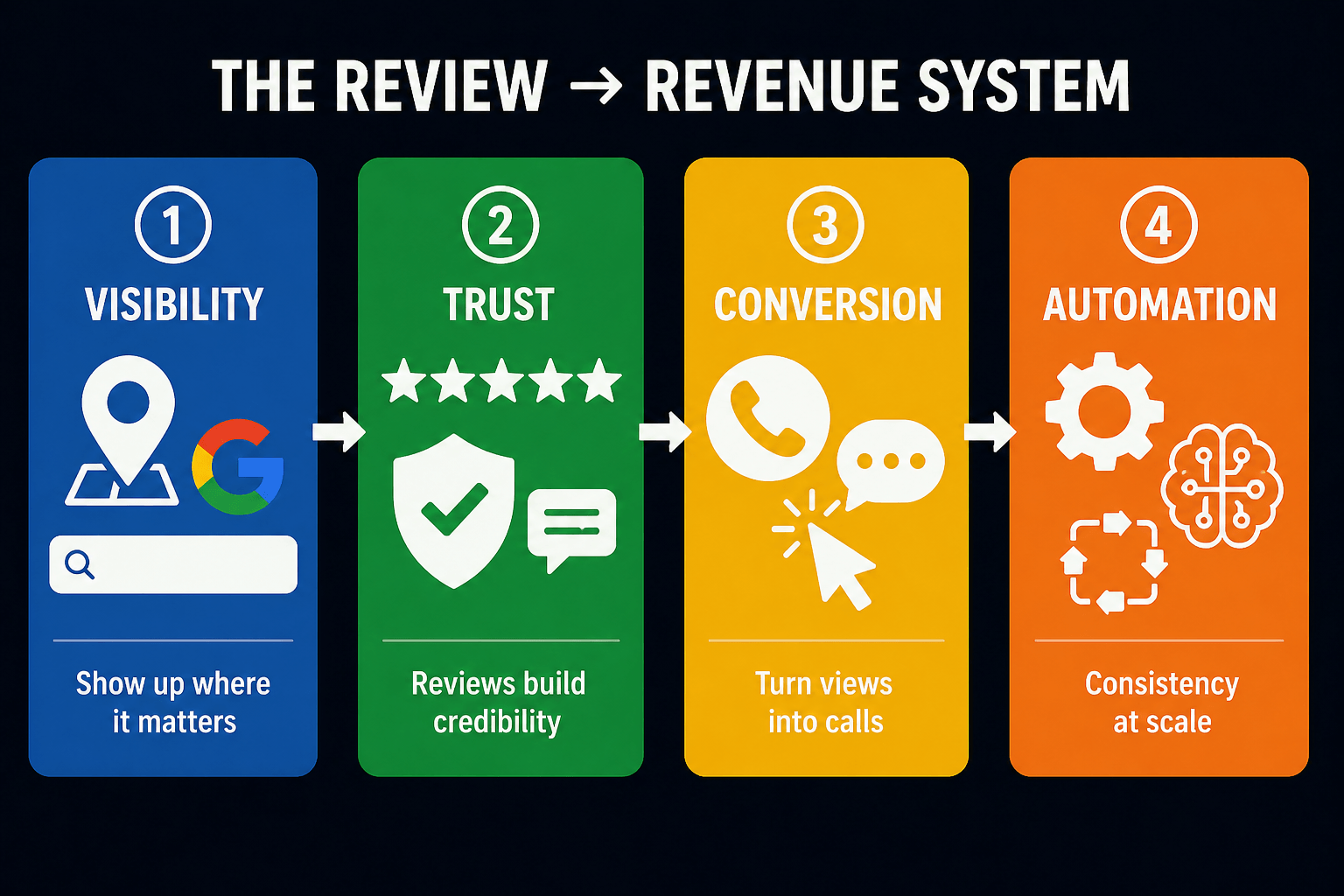
How AI Turns Roofing Reviews Into More Jobs
How AI actually turns reviews into roofing jobs is now one of the most important drivers of visibility, trust, and revenue for roofing companies competing in Google Maps, Local Service Ads, and AI search results. This guide is for roofing business owners and marketing...

LSA Budget for Roofers: Set It Right & Get More Leads
Your LSA budget doesn’t control how much you spend—it controls whether you get leads at all. For roofers using Google Local Service Ads, this is one of the most misunderstood parts of the platform. This guide is for roofing business owners and marketing managers who...
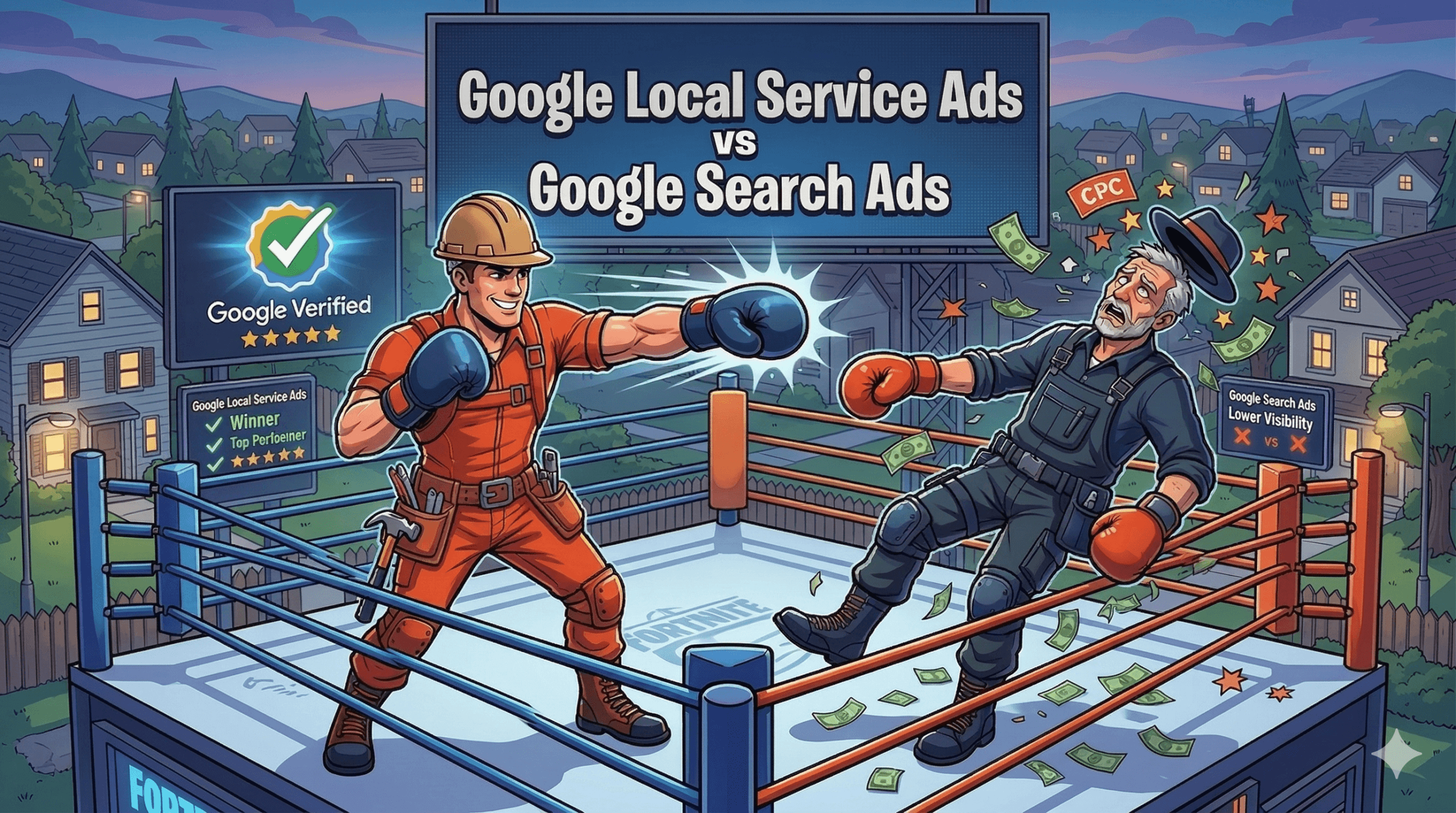
Google Local Service Ads vs Google Ads for Roofers
Google Local Service Ads vs Google Ads for roofers is one of the most important decisions when you want more roofing leads from Google. Most roofing companies think it comes down to one thing: pay per lead vs pay per click. That matters, but it is not the full answer....