

How Roofing Companies Take Control of Job Flow, Visibility, and Revenue Before the Year Even Starts
Most roofing companies don’t struggle because of workmanship.
They struggle because they walk into a new year without a real plan to control job flow, visibility, and demand.
They work hard. They stay busy. They hope the phone keeps ringing.
Hope feels productive. It isn’t.
This article is the full plan behind our recent webinar and our broader roofing growth strategy. It’s built for roofing business owners and roofing marketing managers who are tired of reacting and ready to operate with clarity.
If you’re responsible for revenue, leads, or growth, this plan is for you.
- Why Most Roofing Companies Lose the New Year Early
- The Shift That Changes Everything: From Hope to Math
- Reverse-Engineering a Roofing Growth Goal
- Goal Line Validation (The “Why” Behind the Number)
- The RoofingREV™ Growth Formula Calculator
- The 5 Growth Levers Roofing Companies Use to Scale
- Why Writing the Numbers Down Changes Everything
- Budgeting Properly for Growth
- How to Use the Calculator and Worksheet Together
- What to Change Now
- Where to Go Next
Why Most Roofing Companies Lose the New Year Early
The issue isn’t effort.
It’s direction.
Most roofing companies start the year with good intentions and immediately jump into activity:
- One month you turn up Google Ads
- The next month you try Facebook
- Then you stop both because the phone slows down or cash feels tight
But growth doesn’t start with tactics. It starts with knowing exactly what the business needs to produce every single week.
The Difference Between Ambition and Operational Clarity
Ambition is saying:
“We want to be a $5M company.”
Operational clarity is saying:
“We need X more jobs per week, supported by Y leads, at Z cost, starting now.”
One creates motivation.
The other creates control.
Without that clarity:
- marketing feels inconsistent
- budgets feel uncomfortable
- decisions feel reactive
- slowdowns feel surprising
Winning roofing companies don’t guess their way through the year. They design it.
The Shift That Changes Everything: From Hope to Math
The most important question a roofing company can ask is not:
“How do we get more leads?”
It’s this:
How many jobs do we actually need to hit our revenue goal—and what does that require weekly?
The SMART Framework, Applied to Roofing
You’ve probably heard of SMART goals. The problem is they’re usually explained in a corporate way that doesn’t translate to job sites and crews.
Here’s what S.M.A.R.T. actually means in roofing terms:
Specific
Not “grow revenue,” but “add $2M in replacement work by December 2026.”
Measurable
How many jobs. How many leads. How many appointments. Weekly, not yearly.
Achievable
Based on your close rate, crew capacity, and seasonality. Not best-case scenarios.
Relevant
Does this goal support your life, your team, and your long-term business? Or just your ego?
Time-bound
Roofing is seasonal. Timelines matter. A 12-month plan is different than an 8-month plan.
When goals get specific, marketing stops feeling random. It starts behaving like a system.
Let’s walk through a real example.
Reverse-Engineering a Roofing Growth Goal (With Real Numbers)
Step 1: Set the Revenue Target
Scenario
- Current revenue: $3,000,000
- Target revenue: $5,000,000
- Timeline: by December 2026
That means the business needs $2,000,000 in additional revenue.
Clear target. Now the math begins.
Step 2: Convert Revenue Into Jobs
Assume an average roof job of $20,000.
If you don’t know your number, that’s a realistic national benchmark.
$2,000,000 ÷ $20,000 = 100 additional jobs
That’s the real goal.
Not growth.
Not traffic.
One hundred more sold jobs.
Step 3: Make the Goal Weekly
Annual goals feel abstract. Weekly targets create control.
100 jobs ÷ 52 weeks ≈ 2 jobs per week
That’s the entire growth challenge in plain terms:
Sell two more jobs per week.
And if you live in the Midwest, you have less than 52 weeks at that $20k per job average, because repairs have a much lower price tag.
Step 4: Convert Jobs Into Appointments
Now we account for close rate.
Let’s assume a 25% close rate, which is strong in roofing.
To sell 2 jobs per week, you need:
- 8 booked appointments per week
Because:
8 appointments × 25% = 2 jobs
Step 5: Convert Appointments Into Leads
Here’s the number most roofing companies overlook: booking rate.
If 65% of your leads turn into booked appointments, then:
To get 8 booked appointments, you need:
- 12–13 leads per week
This is usually where clarity hits for the first time.
Step 6: Convert Leads Into Cost
Now we apply the real-world lead cost.
Assume:
- $300 per qualified roofing lead
- 13 leads × $250 = $3,250 per week
That’s roughly:
- $13,000 per month
- $156,000 per year
The Full Picture in One Sentence
To grow from $3M to $5M in the next 12 months, this Florida roofing company needs to generate about 13 qualified leads per week, convert 8 into appointments, close 2 jobs, and invest around $13,000 per month in marketing to make it happen. That is a 7.8% investment in marketing in relation to your additional growth revenue.
This is also why marketing feels stressful when the math isn’t visible. If you want a deeper breakdown of roofing customer acquisition cost and what’s realistic by growth stage, we break that down for you.
Why Worst-Case Assumptions Win
Planning for best-case scenarios creates fragile plans.
Planning with conservative close rates and higher lead costs creates resilience.
If the worst case still works, the plan works.
Goal Line Validation (The “Why” Behind the Number)
Revenue goals collapse when they’re not emotionally anchored.
Numbers alone don’t carry you through slow weeks, tough markets, or long days.
Why Motivation Matters
When pressure hits, vague goals disappear.
Validated goals hold.
The Four-Level “Why” Framework
Strong goals answer more than “how much.”
They answer why it matters.
Family
Stability. Time. Reduced stress at home.
Crews
Consistent work. Better pay. Long-term careers.
Longevity
A business that survives market shifts and economic cycles.
Getting Off the Roof
Moving from operator to owner. Leading instead of reacting.
When goals connect to real outcomes, discipline follows.
The RoofingREV™ Growth Calculator & Focus Engine
To make this process fast and repeatable, we built the RoofingREV™ Growth Calculator and Focus Engine.
It walks you through five simple questions and shows you:
- the revenue gap
- how many jobs are required
- how many leads it takes to get there
- weekly and monthly targets
No login. No setup. Just clarity.
👉 Use the roofing lead calculator
This gives you the destination and the numbers required to reach it.
Then, it will ask up to five more questions regarding what your roofing company is currently doing and provide 2-3 growth levers to focus on for your 60-90 day plan.
That brings us to the execution part.
How Roofing Companies Actually Hit Their Numbers: The 5 Growth Levers
Once you know how many leads you need, you don’t guess where they’ll come from. You pull levers.
Lever 1: Doorknocking and Canvassing
This is still one of the fastest ways to generate revenue when done consistently:
- knock 5–10 houses around every job
- hit before, during, and after installation
- place yard signs early and visible
One completed job should help create the next.
Lever 2: Google Domination (LSA, PPC, Local SEO)
This is where high-intent buyers live.
- Maximize Google Local Service Ads for ready-to-buy calls – you pay per lead
- Run geo-targeted Google Pay-Per-Click ads only in areas you want
- Strengthen local SEO and Google Maps visibility
If Google Maps is not a core part of your plan, you are leaving demand on the table. Here’s how roofing companies dominate the Map Pack step by step.
If you’re running LSAs but not seeing consistent results, these are the LSA mistakes killing roofing businesses last year.
Lever 3: Branding, Trust, and Authority
Branding is not logos. It’s recognition and confidence.
- wrapped trucks and trailers
- yard signs on every job
- consistent visuals and messaging
- proof that reinforces trust before price
We break down how authority and trust are now built in roofing markets.
Lever 4: Social Domination (Organic + Paid)
Social warms buyers before they ever call.
- keep Meta ads running consistently
- retarget website visitors and video viewers
- post 3–5 short videos per week
- capture before-and-after footage and real jobsite insights
This becomes especially important during slower seasons.
Lever 5: Referral Machine
Referrals lower acquisition cost and increase close rates:
- team referral incentives
- customer referral programs where both sides win
- asking during and after every job
Most roofing companies underutilize this lever. The ones that don’t feel it immediately.
Pick the Right Levers to Start With
If you feel overwhelmed, just start with 2-3 growth levers.
Choose which levers to start with using this formula: Fix one. Add one. Build one.
- Fix One: 1 lever you already have, but is underperforming
- Add One: 1 lever you are not using at all
- Build One: 1 lever that builds compounding value
Lever #1: Fix What Already Exists (Fastest ROI)
This is the lever that’s already in motion but leaking revenue.
Examples:
- Google Maps profile exists, but it’s neglected
- Ads are running, but tracking is unclear
- Social media is active, but inconsistent
- Reviews are coming in, but not systematized
Why start here?
- No new systems required
- No learning curve
- Small improvements often unlock big gains
This lever builds confidence because results show up quickly.
Lever #2: Add One New Channel You’ve Never Used
This is where most growth actually comes from.
Examples:
- Never done Local Service Ads
- Never done consistent Google Maps optimization
- Never done weekly video content
- Never systemized referrals
Why this matters:
- New channels unlock new demand, not recycled leads
- It prevents over-reliance on one source
- It increases resilience when things slow down
The rule: one new channel only.
Not two. Not three.
Lever #3: Choose One Compounding Lever (This Is the Anchor)
This is the lever that gets stronger over time instead of resetting every month.
Examples:
- Google Maps optimization
- Reviews and reputation systems
- Referral systems
- Evergreen content
This lever protects the business long-term.
It reduces future marketing pressure.
It lowers acquisition cost over time.
This is how companies stop feeling like they’re starting over every year.
What NOT to Do
Do not:
- try all five at once
- abandon a lever before it has time to work
- jump channels every 30 days
- wait until things slow down to start
Growth happens when less is done consistently, not when more is done sporadically.
The Part Most Roofers Skip: Writing the Numbers Down
Understanding the math is powerful.
Seeing it laid out is even more powerful.
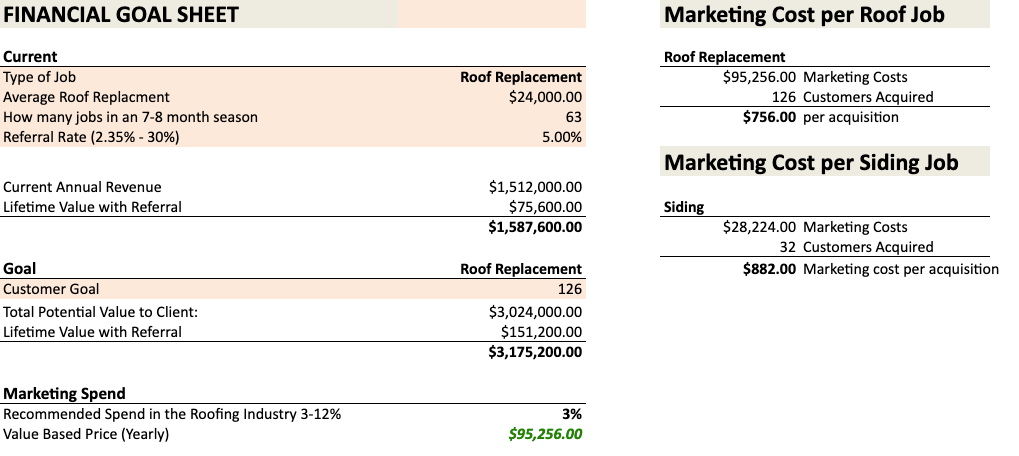
That’s why we also give away the Financial Analysis & Goals Worksheet.
Make a copy, because this spreadsheet helps you:
- align revenue goals with marketing spend
- understand how much growth your business can support
- see margin pressure before it becomes a problem
- make decisions with confidence instead of stress
It’s built for roofing owners, not accountants.
The Financial Relationship That Matters
Growth lives at the intersection of:
- Marketing spend
- Cost to acquire a customer
- Gross margin
Ignore one, and the system breaks.
The Cost of Fear-Based Budgeting
Fear-based budgeting feels safe.
It’s also why growth plateaus.
When spending is reactive, marketing becomes inconsistent. When marketing is inconsistent, results never stack.
Budgeting for Growth Properly
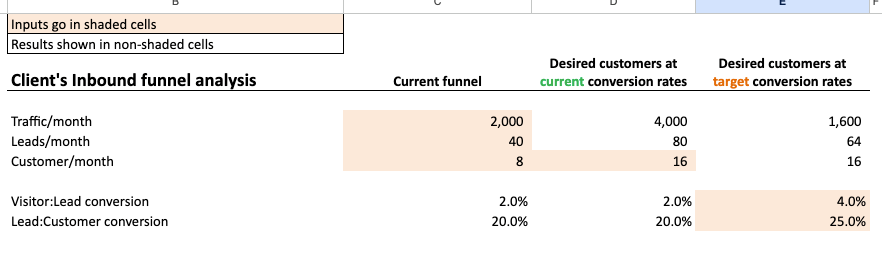
Not all growth requires the same investment.
Understanding Growth Plans
Maintenance growth
Protecting current revenue.
Moderate growth
Steady expansion without strain.
Accelerated growth
Aggressive market capture with higher spend and tighter execution.
Each plan has a different risk profile. The mistake is pretending they don’t.
Why Bigger Companies Spend Differently
Larger companies often spend a lower percentage of revenue on marketing.
But the dollar amount is higher.
- They buy consistency
- They buy visibility
- They buy predictability
The Real Question Roofing Businesses Avoid
Not “How cheap can I do this?”
But:
“How much am I willing to invest to reliably buy revenue?”
When that question is answered honestly, budgeting becomes strategic instead of emotional.
How to Use Both Tools Together (This Is the Power Move)
Here’s the workflow we recommend:
Step 1
Run the RoofingREV™ Growth Formula Calculator to determine:
- how many jobs you need
- how many leads that requires
- what weekly execution looks like
Step 2
Open the Financial Analysis & Goals Worksheet and plug in:
- current revenue
- target revenue
- marketing allocation
- overhead and margin assumptions
Step 3
Finish the RoofingREV™ Growth Focus Engine to decide:
- how aggressive marketing should be
- which growth levers to pull first
- where tightening systems matters more than spending more
Together, these tools turn a goal into an operating plan.
What to Change Now (Before the Year Starts)
Waiting is the most expensive decision.
The Three Most Common Planning Mistakes
- Setting goals without math
- Waiting for the slow season to react
- Treating marketing as optional when things feel busy
Why Waiting Is Already Too Late
By the time demand drops, it’s too late to build momentum.
Visibility, trust, and systems take time.
Moving From Reaction to Control
Control comes from:
- Clear targets
- Weekly execution metrics
- Aligned spending
- Consistent visibility
That’s how roofing companies stop guessing and start leading their market.
Where to Go Next
If you want to pressure-test your entire marketing foundation, start here:
👉 Ultimate Roofing Marketing Checklist
If you’re still ramping up and want daily insights:
👉 Roofing Revenue Alliance Facebook Group
If you’re already scaling and want a strategic acceleration plan:
👉 Book a Discovery Call
Built by Roofing REV Marketing, a growth partner focused on helping roofing companies control demand, visibility, and revenue.
Same crews.
Same craftsmanship.
A better operating system.
That’s how roofing companies win the year before it even starts.
How Roofers Should Dispute Bad Google Local Service Ad Leads
Dispute google local service ad leads is one of the most overlooked ways for roofers to control cost and improve profitability from LSAs. Most roofing companies focus on getting more leads. That’s only half the equation. If you’re paying for the wrong leads,...
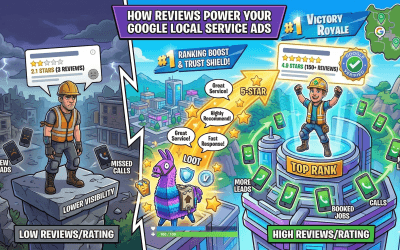
How Reviews Power Google Local Service Ads
Reviews are one of the most important factors in determining how many leads your business gets from Google Local Service Ads. Most roofing companies treat reviews as reputation. In reality, Google reviews are a ranking signal, trust signal, and conversion driver...

ADA Compliance for Roofing Websites + $5K Tax Credit
ADA compliance for roofing websites is no longer optional, and most roofing companies are exposed without knowing it. Most roofers think ADA laws only apply to buildings. They don’t. Your website is part of your business. If someone cannot use it because of a...