
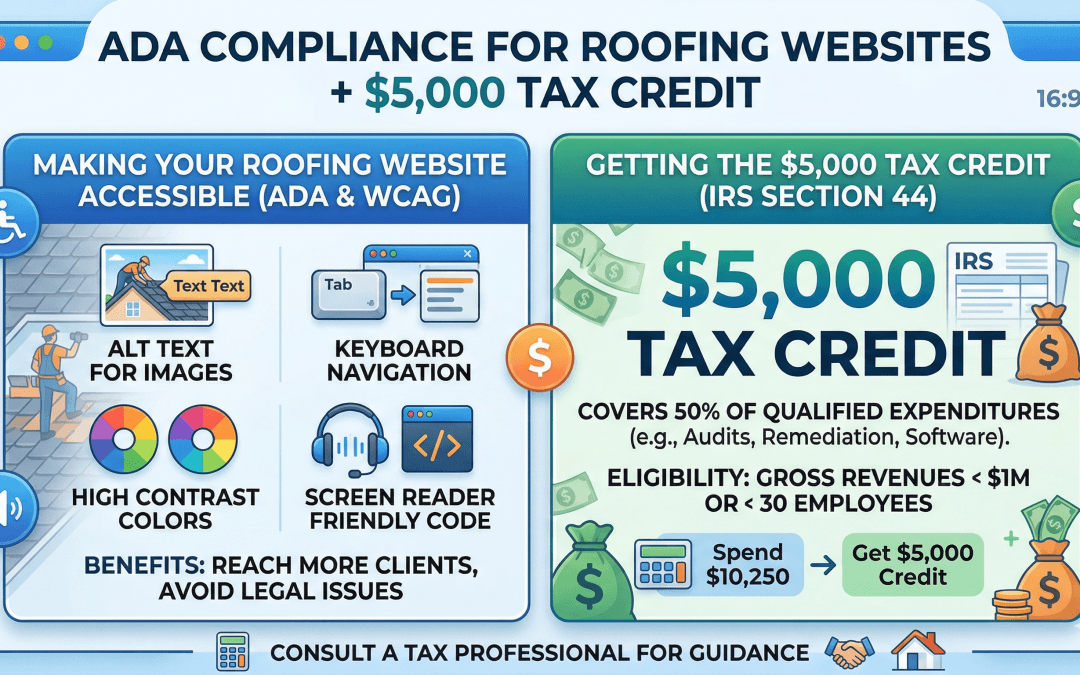
ADA compliance for roofing websites is no longer optional, and most roofing companies are exposed without knowing it.
Most roofers think ADA laws only apply to buildings.
They don’t.
Your website is part of your business. If someone cannot use it because of a disability, that creates risk.
Most companies don’t find this out until they are forced to fix it.
Executive Summary: Most roofing websites are not ADA compliant, which creates legal risk and lost leads. The good news is there is a federal tax credit that can offset the cost of fixing it.
Table of Contents
- Why Roofing Websites Are Now a Legal Risk
- ADA Doesn’t Stop at Your Office
- The Problem Most Roofers Don’t See
- What a Non-Compliant Website Looks Like
- What Happens If You Ignore This
- Why This Is Bigger Than Compliance
- The Part Most Roofing Companies Miss (The Tax Credit)
- Do You Qualify?
- What Actually Counts Toward the Credit
- This Is Not as Expensive as You Think
- What To Do Next
- Key Takeaways
- Fix It Before It Becomes Expensive
- FAQs
Why Roofing Websites Are Now a Legal Risk
Most roofing companies think ADA laws only apply to buildings.
They don’t.
Your website is part of your business. If someone can’t use it, that can create a problem.
ADA Doesn’t Stop at Your Office
The ADA was created before websites were common.
Today, websites are expected to be accessible.
This is where WCAG comes in. These are the standards used to make websites usable for people with disabilities.
Learn more about ADA expectations here: https://www.ada.gov/
The Problem Most Roofers Don’t See
You think your site works fine.
You’ve never had a complaint.
Here’s the truth:
People who can’t use your site don’t complain.
They leave.
What a Non-Compliant Website Looks Like
- Images with no descriptions
- Forms that don’t work with screen readers
- Videos with no captions
- Confusing navigation
- Hard-to-read content
What Happens If You Ignore This
This is preventable:
- Demand letters
- Forced fixes
- Legal costs
- Lost trust
Why This Is Bigger Than Compliance
About 1 in 4 adults in the U.S. lives with a disability.
That is a large group of potential customers.
Accessibility helps more people use your site. It also improves the experience for everyone.
The Part Most Roofing Companies Miss (The Tax Credit)
There is a tax credit that helps pay for accessibility.
Here’s how it works:
- Covers 50% of eligible costs
- Up to $10,250 in spend
- Max $5,000 credit per year
- First $250 is not included
Learn more from the IRS Disabled Access Credit.
Do You Qualify?
You may qualify if:
- You made less than $1,000,000 last year
- OR you have 30 or fewer employees
What Actually Counts Toward the Credit
- Website accessibility fixes
- Audits
- Accessibility tools
- Fixing videos or PDFs
- Improving structure and navigation
This Is Not as Expensive as You Think
Most people think this is expensive.
It’s not.
Many fixes are low cost. Some are under $500.
The tax credit reduces your real cost.
What To Do Next
- Audit your website
- Find the problems
- Fix the issues
- Track your costs
- Work with your CPA
To claim the credit, file IRS Form 8826.
Key Takeaways
- ADA applies to your website
- Most roofing sites are not compliant
- This creates risk and lost leads
- There is a tax credit to help pay for it
Fix It Before It Becomes Expensive
You have two choices.
- Fix this now while it is small and controlled.
- Or deal with it later when it is forced, rushed, and more expensive.
Most roofing companies wait.
The ones that don’t are the ones that stay ahead.
You don’t need to guess where you stand.
Get Your FREE ADA Compliance Website Audit
FAQs
Does ADA apply to roofing company websites?
Yes. ADA expectations now include websites. If someone cannot use your roofing website because of a disability, it may create legal risk. This applies to small businesses as well, especially if your site is used to generate leads or provide services.
What is WCAG in simple terms?
WCAG stands for Web Content Accessibility Guidelines. These are rules that help make websites easier to use for people with disabilities. This includes readable text, clear navigation, and making sure assistive tools like screen readers can understand your content.
Can a small roofing company be sued for ADA non-compliance?
Yes. Small businesses are not exempt. Many companies receive demand letters or legal pressure because their websites are not accessible. Even if nothing has happened yet, that does not mean your business is protected.
What is the Disabled Access Tax Credit?
The Disabled Access Tax Credit is a federal tax credit that helps small businesses pay for accessibility improvements. This includes website fixes, audits, and tools. It directly reduces the amount of taxes you owe, not just your income.
How much money can I get back?
You can receive up to $5,000 per year. The credit covers 50% of eligible expenses up to $10,250, after the first $250. The final amount depends on how much you spend on accessibility improvements.
Do I qualify for the ADA tax credit?
You may qualify if your roofing company made less than $1 million last year or has 30 or fewer employees. Most local roofing businesses meet one of these requirements, but you should confirm with your CPA.
What website changes qualify for the credit?
Common qualifying improvements include adding alt text to images, improving navigation, fixing forms, adding captions to videos, and improving overall site structure. Accessibility audits and ongoing compliance tools may also qualify.
Is ADA website compliance expensive?
Not always. Many accessibility improvements are low cost, and some are free. Many fixes cost under $500. When combined with the tax credit, the total cost is often much lower than expected.
How do I claim the ADA tax credit?
You claim the credit by filing IRS Form 8826 with your tax return. You should keep records of your accessibility expenses and work with a CPA or tax professional to make sure everything is done correctly.
Do I need a developer to fix ADA issues?
In most cases, yes. Many accessibility issues involve code, structure, or media fixes. A developer or accessibility specialist can identify and fix these issues properly so your website meets current standards.
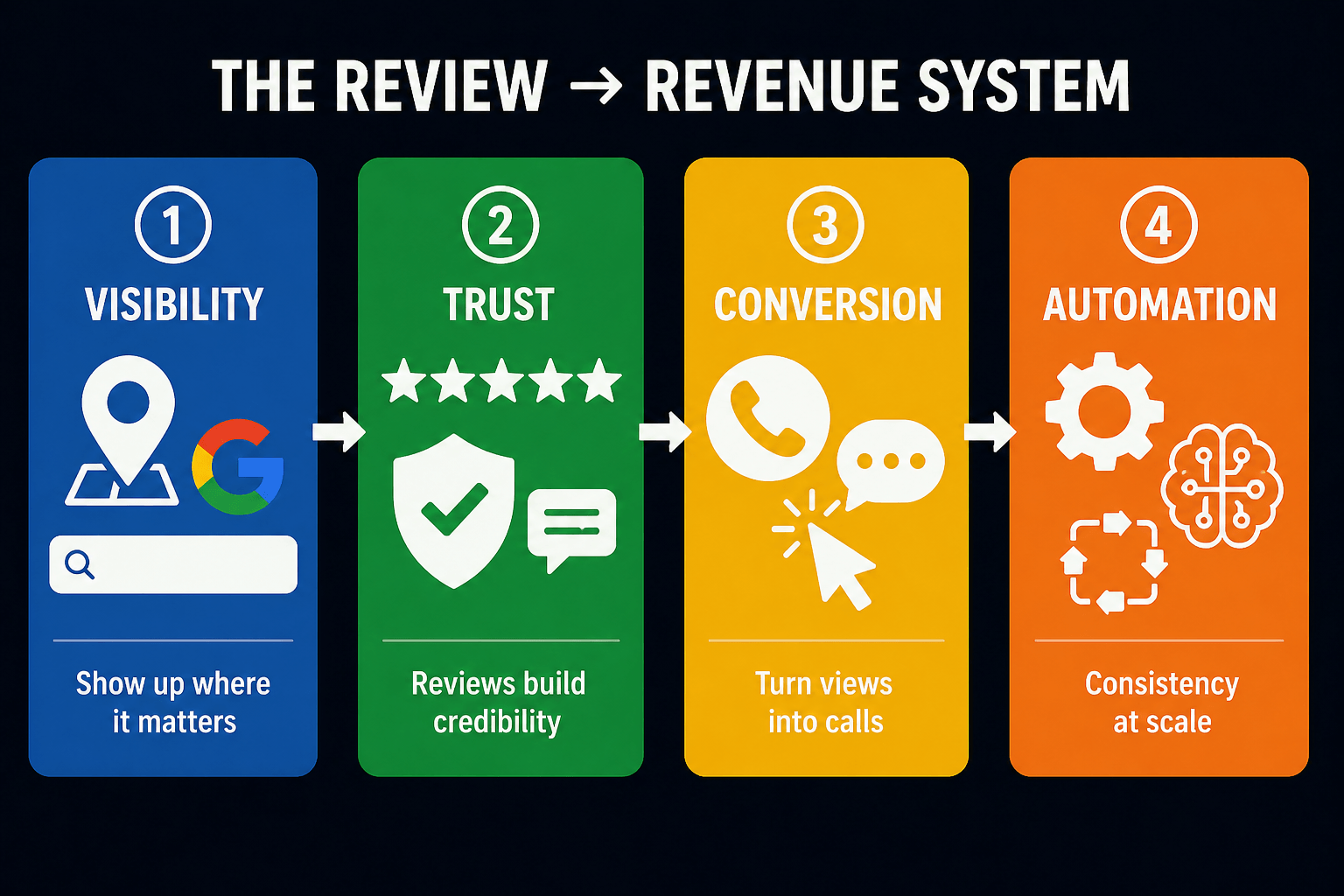
How AI Turns Roofing Reviews Into More Jobs
How AI actually turns reviews into roofing jobs is now one of the most important drivers of visibility, trust, and revenue for roofing companies competing in Google Maps, Local Service Ads, and AI search results. This guide is for roofing business owners and marketing...

LSA Budget for Roofers: Set It Right & Get More Leads
Your LSA budget doesn’t control how much you spend—it controls whether you get leads at all. For roofers using Google Local Service Ads, this is one of the most misunderstood parts of the platform. This guide is for roofing business owners and marketing managers who...
Google Local Service Ads vs Google Ads for Roofers
Google Local Service Ads vs Google Ads for roofers is one of the most important decisions when you want more roofing leads from Google. Most roofing companies think it comes down to one thing: pay per lead vs pay per click. That matters, but it is not the full answer....