
Google’s AI is no longer just helping property owners find roofing companies. It’s now making phone calls on their behalf, asking questions about services, pricing, and availability.
One of our roofing clients recently received one of these calls, and it revealed a problem that could cost roofing companies new business.
The call wasn’t a scam or a sales pitch. Google’s AI was trying to find out how soon someone could inspect an urgent roof leak.
Unfortunately, the conversation ended with one of the worst responses the roofing company could have provided: “They can email us.”
Let’s look at what happened, why that response was a problem, and what your team should say when Google’s AI calls your roofing business.
Executive Summary:
Google can now make automated phone calls on behalf of customers searching for local services, including certain home repair services.
- A real roofing company received one of these calls. Google’s AI was asking about the earliest availability for an urgent roof inspection.
- The opportunity wasn’t handled well. The representative couldn’t confirm availability and ultimately told the AI that the customer could email the company.
- You don’t need access to a scheduling calendar to provide a useful answer. Your team can share a realistic inspection timeframe, explain how appointments are confirmed, and ask whether customer contact information is available.
- Train your team now. Anyone answering your phone should know how to respond to common customer questions, whether the caller is human or AI.
How Should Roofing Companies Respond When Google’s AI Calls?
Treat the call just like a real customer inquiry.
Answer questions about your services, service area, and typical inspection availability. Ask whether the AI can share the customer’s contact information, and provide clear scheduling instructions if it cannot.
Never promise an appointment you can’t confirm, and don’t simply tell the customer to email you.
The goal is to make it as easy as possible for the customer to take the next step.
Listen to an Actual Google AI Calling Scenario
We recently received a recording of Google’s AI calling one of our roofing clients on behalf of someone needing an urgent roof inspection.
We’ve included an audio reenactment and transcript below.
Here’s How the Conversation Went
Roofing company representative: Hi, this is Chris from The Roofing Company. How can I help you?
Google AI: Hey, I’m calling on behalf of a customer who had some questions. This is an automated service from Google and the call is monitored and recorded to improve our services. They would like to know what is your earliest availability for an urgent inspection of a leaking shingle roof.
Roofing company representative: So I would have to take a message and get someone to call them back.
Google AI: I understand. Is there any information you can share with me that I can relay back to the customer?
Roofing company representative: They can email us.
Google AI: Got it. Thank you for your time and have a great day. Goodbye.
This is an anonymized reenactment of a real call. Identifying details have been changed.
What Went Wrong With This Call?
First, the roofing representative did answer the phone. That’s good.
But answering the phone doesn’t mean you’ve successfully handled the inquiry.
The AI was asking a very specific question: How soon can someone inspect a leaking roof?
The representative didn’t have access to the scheduling calendar, which is understandable. Not everyone answering the phones can book an inspection.
But that doesn’t mean you can’t provide helpful information.
The first response was to take a message and have someone call back. That might work with a human caller, but you can’t assume Google’s AI has permission to provide the customer’s phone number.
Then Google gave the representative a SECOND opportunity:
“Is there any information you can share with me that I can relay back to the customer?”
And the answer was, “They can email us.”
That’s one of the worst responses you could give in this situation.
Think about it.
Someone has an ACTIVE ROOF LEAK. Water could be damaging ceilings, insulation, equipment, inventory, or other parts of the property.
They’re looking for help NOW, and they’re using Google’s AI to save themselves the trouble of calling multiple roofing companies.
Instead of receiving useful information, they’re told to send an email.
So now the customer has another task to complete. They still don’t know when someone can inspect the roof, how quickly the company responds to emergencies, or whether they can get help before more damage occurs.
And here’s something else to consider.
Google’s AI may be contacting multiple roofing companies on that customer’s behalf. What happens when another roofer provides a realistic inspection timeframe and clear instructions for scheduling?
Who do you think that customer is more likely to contact?
We don’t know whether this particular customer hired another contractor. But we do know the conversation ended without an appointment, an estimated inspection timeframe, or a useful next step beyond sending an email.
The company answered the phone, but it didn’t really answer the customer’s question.
This is the same kind of problem we see with traditional roofing inquiries. We’ve covered how missed calls and poor lead handling can hurt results in our article about roofing Local Service Ads stop producing consistent inquiries.
The source of the call might be changing. The importance of handling it properly hasn’t.
What Should Your Roofing Company Say Instead?
Let’s say your receptionist, office manager, or answering service doesn’t have access to the scheduling calendar.
No problem. Give them a response they can use.
Here’s what I recommended to our client:
“Typically, we can schedule roof inspections within X business days. Our scheduling team confirms the earliest available appointment based on the property type, location, and roofing needs. Are you able to provide the customer’s contact information so we can arrange the inspection?”
Of course, replace X with a realistic timeframe for your company.
Don’t promise an inspection tomorrow if you don’t know whether anyone is available.
And because the customer mentioned an urgent roof leak, I’d also recommend having a separate response for those situations.
For example:
“We understand it’s an urgent roof leak. We prioritize active leaks whenever possible, but our scheduling team will need to confirm the earliest available inspection. Are you able to share the customer’s contact information so we can help them?”
See the difference?
You’re answering the question as best you can, showing the customer that you understand the urgency, and trying to move the conversation toward an appointment.
What if Google’s AI Can’t Provide the Customer’s Contact Information?
Google may be authorized to share certain information supplied by the customer, but that doesn’t mean you’ll always receive a name, phone number, or email address.
If the AI cannot provide the information, don’t end the conversation with “email us.”
Try this instead:
“Please let the customer know that our scheduling team can confirm the earliest inspection appointment when they call our office at [insert phone number] during [insert business hours]. If they have an active roof leak, please ask them to mention that when calling so we can prioritize their request when possible.”
Now the AI has something useful to report back.
You’ve provided clear instructions, explained how scheduling works, and made it easier for the customer to take the next step.
That’s a much better outcome than telling someone with a leaking roof to send an email.
How Does Google’s AI Calling Feature Work?
Google introduced AI-powered calling in Search to help people gather information from local businesses without having to make every call themselves.
In its announcement of AI-powered business calling, Google explained that users can ask Search to contact businesses and gather pricing and availability information on their behalf.
For eligible searches, someone can select an option such as “Have AI check pricing,” provide details about what they need, and let Google contact local businesses.
The AI makes automated calls, asks relevant questions, and gathers information that can be shared with the customer.
Google has also expanded its agentic calling capabilities to selected home repair services, as discussed in its May 2026 Search announcement.
And these capabilities aren’t standing still.
Google is developing AI tools that go beyond providing search results and help customers take action.
But roofing companies don’t need to predict every new AI feature to prepare for something that’s already happening.
Start by making sure your phones are being answered properly.
5 Things Every Roofing Company Should Do Right Now
You don’t need to overhaul your entire business because Google introduced another AI feature.
But I would make these five improvements:
- Train everyone who answers your phones
That includes receptionists, office managers, salespeople, after-hours answering services, and anyone covering during lunch breaks. - Establish realistic inspection timeframes
Your staff should know what to say about typical availability for repairs, replacements, and urgent leaks without promising appointments they cannot confirm. - Prepare answers to common questions
Services offered, service areas, inspection fees, emergency response procedures, and scheduling availability should all be familiar to your team. - Ask for customer information when appropriate
If Google’s AI can share authorized contact details, your team should know to ask. If it can’t, provide clear instructions for the customer to contact you directly. - Review how calls are being handled
Listen to actual conversations, identify missed opportunities, and coach your team. Don’t assume that because someone answered the phone, the inquiry was handled correctly.
Here’s something else worth remembering.
This advice doesn’t apply ONLY to AI phone calls.
The same problems happen when real people call roofing companies every day.
Calls get answered without useful information. Customers are told someone will call them back. Appointments aren’t scheduled. Follow-up gets delayed.
And then the owner wonders why marketing isn’t producing more jobs.
We’ve discussed this same issue when looking at mistakes that cost roofing companies opportunities through Google Local Services Ads.
Sometimes you don’t need to spend another dollar on advertising.
Sometimes you need to fix what happens AFTER the phone rings.
Key Takeaway:
Getting found online is only half the battle. Your team still needs to turn those inquiries into appointments and, ultimately, paying customers.
Frequently Asked Questions
Can Google's AI really call roofing companies on behalf of customers?
Can Google's AI give us the customer's name and phone number?
Can Google's AI actually schedule a roof inspection?
What should we say if we don't know our earliest inspection availability?
Should roofing companies treat Google AI calls differently from regular customer calls?
Don’t Let a Phone Call Cost You Your Next Roofing Job
Google is changing how people find and contact local businesses.
But whether the caller is a homeowner, commercial property manager, or Google’s AI, the fundamentals haven’t changed.
Answer the phone. Answer the questions. Make it EASY to do business with you.
You can spend thousands getting your roofing company found on Google, but if your team doesn’t know how to handle the inquiries, you’re making it easier for competitors to win those jobs.
At Roofing REV Marketing, we look beyond rankings, clicks, and phone calls. We help roofing companies improve the entire process, from getting found online to turning qualified opportunities into booked jobs and revenue.
Want to know where your roofing company might be losing customers?
Let’s look at your marketing, lead handling, and sales process to find what’s working, what’s costing you business, and what needs to change.
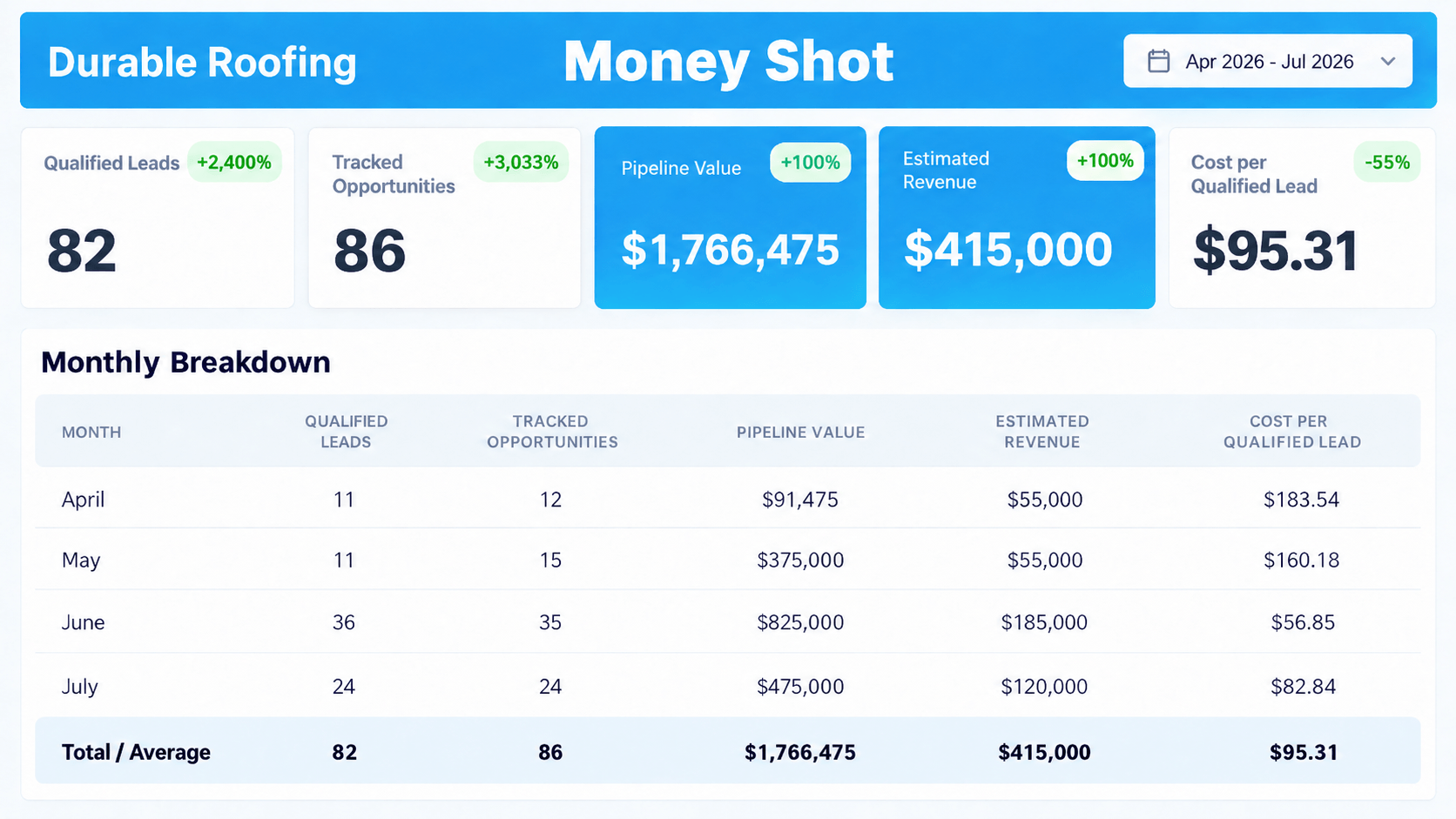
Durable Roofing Generated 82 Qualified Leads Within First 4 Months
Durable Roofing Generated 82 Qualified Leads Within First 4 Months That’s $1.77 Million in Pipeline Value!View More Success Stories > Durable Roofing Generated 82 Qualified Leads Within First 4 MonthsDurable Roofing is a fourth-generation roofing company with more...
Top 10 Google AI Search Changes for Roofers – September 2026
For roofing and exterior companies, recent changes across Google Search, AI results, Maps, Local Services Ads, and Google Business Profiles are affecting more than rankings. They are changing how homeowners discover contractors, research their options, make contact,...
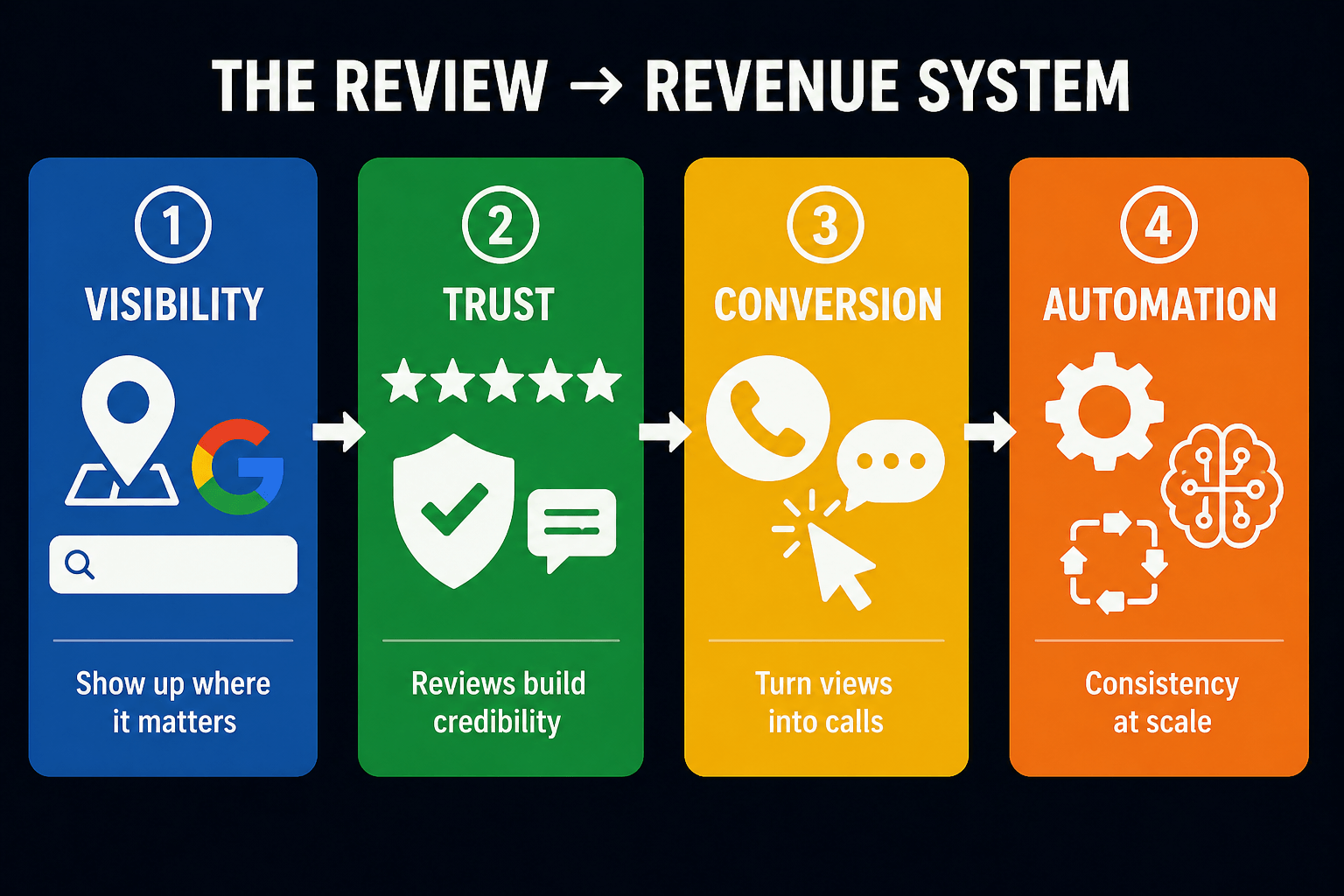
How AI Turns Roofing Reviews Into More Jobs
How AI actually turns reviews into roofing jobs is now one of the most important drivers of visibility, trust, and revenue for roofing companies competing in Google Maps, Local Service Ads, and AI search results. This guide is for roofing business owners and marketing...