
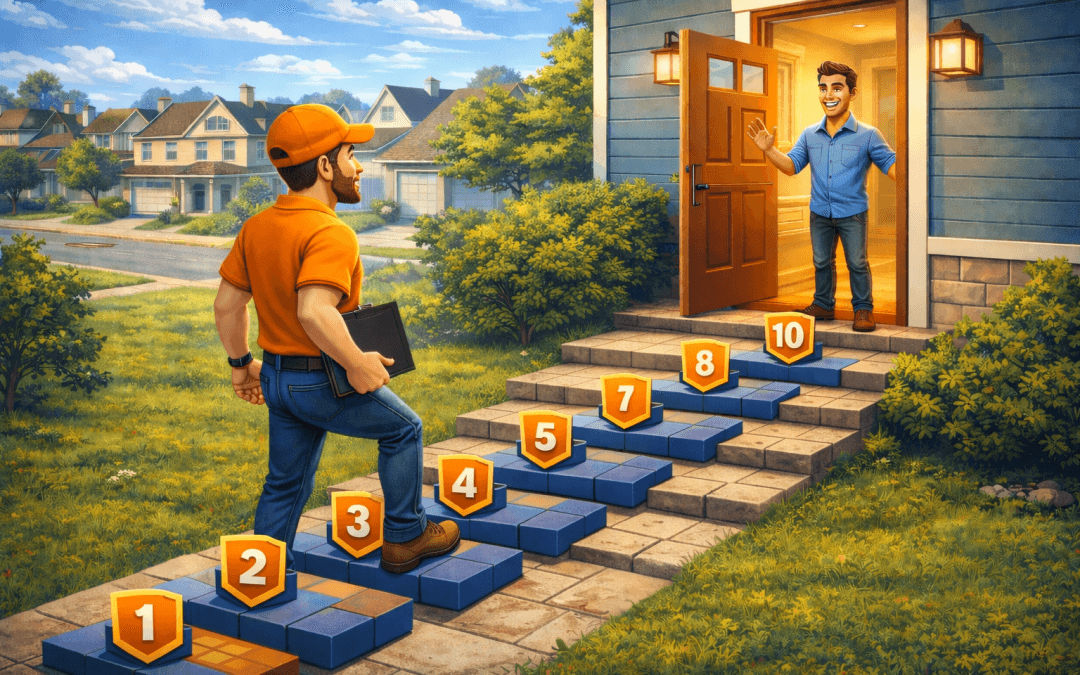
The System Roofing Companies Use After Their LSAs Go Live
Google Local Service Ads management is one of the most overlooked parts of generating consistent roofing leads, and it requires a daily routine.
Many roofing companies successfully complete the verification process, get their ads approved, and see their ad go live.
Then they assume the system will continue delivering leads automatically.
Sometimes it does.
But the roofing companies that consistently receive the most calls usually follow a structured Local Service Ads management routine (daily/weekly/monthly) after their ads are active.
Google constantly evaluates how businesses respond to homeowners, manage leads, collect reviews, and interact with the LSA platform.
When those signals remain strong, companies tend to appear more frequently.
When those signals weaken, visibility and lead volume can decline.
Below is the daily, weekly, and monthly ongoing Google Local Service Ads management system that many successful roofing companies follow to keep their LSAs producing calls.
What Is Google Local Service Ads Management?
Google Local Service Ads management refers to the ongoing daily, weekly, and monthly routine of monitoring and optimizing LSAs after they are live. Effective management includes answering calls quickly, responding to message leads, updating lead statuses in the LSA dashboard, maintaining consistent Google reviews, providing feedback on leads, and keeping the business profile active. Roofing companies that consistently follow these LSA management habits often maintain stronger visibility and receive more calls from homeowners searching for roofing services.
Google Local Service Ads Management Checklist
Daily habits that help roofing companies maintain strong LSA performance:
- Answer calls within 15–20 seconds
- Respond quickly to message leads
- Update lead statuses in the dashboard
- Provide feedback on leads
- Maintain consistent Google reviews
- Upload new job photos regularly
- Track leads in your CRM
Roofing companies that consistently follow these ongoing management habits often maintain stronger visibility in Local Service Ads.
1. Treat Every Google LSA Call Like a $20,000 Roof
Every Local Service Ad call represents a homeowner actively searching for roofing help.
One of the most important parts of Google Local Service Ads management is answering those calls quickly.
Google measures how quickly businesses answer calls and how often calls are missed.
Companies that answer consistently tend to receive more lead opportunities.
Best practices
- Answer calls within 15–20 seconds whenever possible
- Route LSA calls directly to a real person
- Avoid automated phone menus or IVR systems
- Keep voicemail greetings short in case a call is missed
Slow response times or missed calls can reduce visibility over time.
2. Respond Quickly to Message Leads
If message leads are enabled, response time matters here as well.
Homeowners often contact multiple companies when requesting roofing help.
The contractor who replies first frequently secures the inspection appointment.
An important part of LSA management is monitoring message leads and responding quickly.
Best practice
- Respond to message leads within a few minutes whenever possible.
- If after hours, set up an automated response.
Fast responses improve homeowner confidence and strengthen performance signals.
3. Manage Local Service Ads Leads in the Dashboard Daily
Local Service Ads are not designed to run unattended.
Strong ad management requires reviewing the dashboard as a daily routine.
Each lead should be updated once the outcome of the call is known.
Typical statuses include:
- Booked: The homeowner scheduled an inspection, estimate, or job.
- Archived: The lead was not valid.
Examples include:
- Wrong service requested
- Outside service area
- Spam or sales calls
Leads that remain unmanaged for long periods send negative engagement signals to the system.
4. Provide Lead Feedback When Prompted
After updating a lead, Google may request feedback about the lead experience.
Providing accurate feedback is another key part of proper Google Local Service Ads management.
You may see options such as:
- Very satisfied
- Satisfied
- Neutral
- Somewhat dissatisfied
- Very unsatisfied
This rating reflects the quality of the lead, not whether the job was won.
For example, a homeowner who legitimately needed roofing work but hired another contractor can still be considered a valid lead.
Google may also ask what happened with the lead.
Examples include:
- Became a customer
- Might become a customer
- High-value service
- Just shopping around
- Duplicate lead
- Someone looking for a job
- Wrong service
Consistent feedback helps Google better match homeowners with roofing companies.
5. Maintain Consistent Google Reviews
Reviews play a major role in both property owner trust and LSA visibility.
Maintaining reviews is an essential part of ongoing Google Local Service Ads management.
Today, LSA reviews come directly from your Google Business Profile.
Rather than occasional bursts of reviews, consistent activity tends to perform better.
Recommended benchmark
- 1–2 new reviews per week per location.
The best time to request a review is shortly after a job is completed and the homeowner is satisfied.
6. Keep Your Profile Active
An active profile signals that your roofing company is engaged and operating.
Photos from your Google Business Profile often appear when homeowners view your ad listing.
Keeping your profile updated is another important part of Local Service Ads management.
Best practice
- Upload 1–3 job photos each week.
Examples include:
- Completed roofing projects
- Before and after photos
- Crews working on site
- Trucks or equipment
Consistent activity helps build credibility with homeowners.
7. Review and Dispute Invalid Leads
Not every lead will match your services.
Roofing companies should periodically review leads and dispute those that clearly do not qualify.
Examples include:
- Spam calls
- Wrong services
- Outside service areas
- Duplicate leads
Submitting disputes allows you to request credit for invalid leads and is a normal part of responsible Google LSA management.
8. Adjust Budget Based on Demand
Your weekly budget affects how many leads you can receive.
If your budget is consistently exhausted early in the week, you may be missing opportunities.
Strategic Local Service Ads management includes adjusting budgets based on demand.
Many roofing companies increase budgets during:
- Storm seasons
- Busy construction periods
- Times when crews have open availability
Gradual adjustments tend to perform better than frequent large changes.
9. Track Every Lead in Your CRM
The lead itself is only the beginning.
Companies that generate the most revenue from LSAs track every lead through their sales process and the true cost of it.
Strong follow-up systems are a critical part of effective Google Local Service Ads management.
Important information to track includes:
- Contact information
- Service requested
- Inspection scheduled
- Estimate outcome
- Job status
Improving follow-up and closing rates can significantly increase revenue from the same number of leads.
10. Pause Ads When You Cannot Answer Calls
If your schedule becomes full or your office cannot answer calls consistently, it may be better to temporarily pause your ads.
Unanswered calls can negatively impact responsiveness signals.
Pausing ads during busy periods can help protect the performance of your Google Local Service Ads system until you are ready to accept new work.
What Many Roofing Companies Discover
Most contractors assume Local Service Ads are simply about ad spend.
In reality, they function more like a performance system.
Roofing companies that receive the most leads consistently show Google that they are:
- Responsive to homeowners or property owners
- Active in managing leads
- Trusted through reviews
- Engaged with their business profile
- Reliable in handling customer inquiries
When those signals remain strong, Google Local Service Ads management can turn LSAs into one of the most consistent sources of roofing calls.
Many roofing companies discover that the difference between struggling LSAs and high-performing LSAs is not simply budget.
It is the system used to manage leads, reputation, and responsiveness signals that Google evaluates every day.
Why Some Roofing Companies Stop Receiving Local Service Ads Leads
One of the most common questions roofing companies ask is:
“Why did my Local Service Ads stop producing calls?”
In many cases, the issue is not budget.
Instead, it relates to weak Google Local Service Ads management signals.
LSAs rely heavily on performance indicators that Google tracks continuously.
When those signals weaken, visibility can decrease.
Common causes include:
- Missed or slow phone responses
- Leads that remain unmanaged in the dashboard
- Inconsistent review activity
- Low-profile activity
- Poor lead feedback habits
Because Google prioritizes responsiveness and engagement, companies that actively manage their leads and customer interactions often regain visibility faster.
For many roofing companies, improving their LSA management habits can increase the number of calls they receive without increasing their advertising budget.
Here we wrote an article about the 5 most common mistakes killing your roofing business’s LSAs and how to fix them.
Common Google Local Service Ads Management Questions
How do you manage Google Local Service Ads daily?
Effective management of Google Local Service Ads usually involves reviewing the LSA dashboard as a daily routine, responding promptly to calls and messages, updating lead statuses, submitting feedback, and monitoring reviews and profile activity.
How often should Google LSAs be managed?
Most roofing companies that perform well with LSAs review their dashboard at least once per day.
A daily Local Service Ads management routine helps ensure leads are updated, and invalid leads are disputed quickly.
What happens if Local Service Ads leads are not managed?
When leads remain unmanaged, Google may interpret this as low engagement.
Strong Google Local Service Ads management signals that your roofing company is responsive and actively helping homeowners.
Frequently Asked Questions About Roofing Local Service Ads
How do Google Local Service Ads work for roofing companies?
Google Local Service Ads allow roofing companies to appear at the very top of Google search results and receive calls directly from homeowners searching for roofing services. Businesses pay for verified leads rather than clicks.
What affects Google Local Service Ads rankings?
Google evaluates signals such as call responsiveness, review activity, lead management habits, profile activity, and customer feedback. Companies that consistently follow strong LSA management practices often appear more frequently.
How quickly should roofing companies answer LSA calls?
Most successful roofing companies aim to answer calls within 15–20 seconds whenever possible. Faster responses signal to Google that your business is reliable and available to help homeowners.
Do more reviews help Local Service Ads performance?
Yes. A steady flow of Google reviews builds homeowner trust and can improve visibility. Many roofing companies aim for 1–2 new reviews per week per location.
Should roofing companies dispute bad LSA leads?
If a lead clearly does not match your services — such as spam calls, duplicate leads, or requests outside your service area — you should dispute it through the Local Service Ads dashboard as part of responsible management.
How Roofers Should Dispute Bad Google Local Service Ad Leads
Dispute google local service ad leads is one of the most overlooked ways for roofers to control cost and improve profitability from LSAs. Most roofing companies focus on getting more leads. That’s only half the equation. If you’re paying for the wrong leads,...
How Reviews Power Google Local Service Ads
Reviews are one of the most important factors in determining how many leads your business gets from Google Local Service Ads. Most roofing companies treat reviews as reputation. In reality, Google reviews are a ranking signal, trust signal, and conversion driver...

ADA Compliance for Roofing Websites + $5K Tax Credit
ADA compliance for roofing websites is no longer optional, and most roofing companies are exposed without knowing it. Most roofers think ADA laws only apply to buildings. They don’t. Your website is part of your business. If someone cannot use it because of a...