
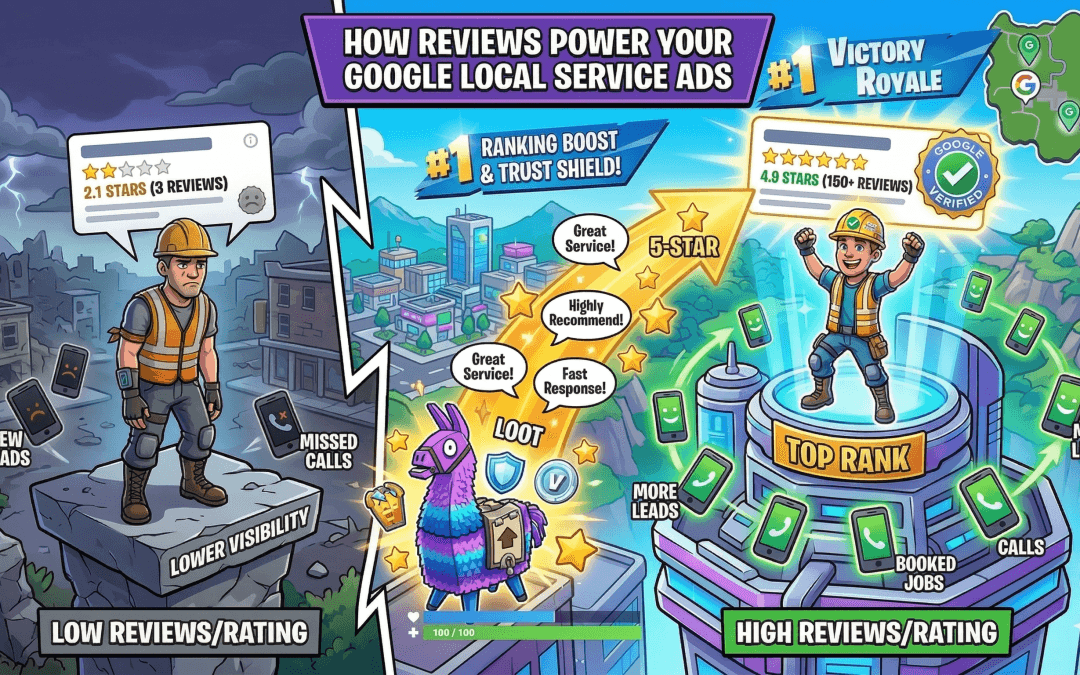
Reviews are one of the most important factors in determining how many leads your business gets from Google Local Service Ads.
Most roofing companies treat reviews as reputation. In reality, Google reviews are a ranking signal, trust signal, and conversion driver combined.
Reviews directly influence Google Local Service Ads ranking and lead volume. Consistent review velocity, strong ratings, and recent activity outperform high volume alone, making a structured review system essential for predictable LSA leads.
Table of Contents
- Why Reviews Control LSA Performance
- The Biggest Misunderstanding About LSA Reviews
- How Reviews Impact LSA Rankings
- Why Consistency Beats Volume Every Time
- The Shift: GBP Reviews and LSA Reviews Are Now Unified
- Real-World Scenarios That Show What Works
- How to Build a Review System That Drives Leads
- Implementation Framework
- Key Takeaways
- Final Perspective
- FAQs
Why Reviews Control LSA Performance
Google Local Service Ads are built to prioritize trust. Reviews are one of the clearest indicators Google uses to determine which roofing companies should be shown first.
- LSA ranking position
- Frequency of ad visibility
- Lead volume and call rate
- Conversion rate from impressions
If your leads have dropped unexpectedly, this may be part of a larger issue:
Why Roofing Local Service Ads Stopped Working.
The Biggest Misunderstanding About LSA Reviews
Most contractors focus only on increasing total reviews.
That approach ignores how Google evaluates:
- Review velocity (consistency)
- Recency (freshness)
- Rating (quality)
- Engagement (responses)
Many of these mistakes overlap with common LSA failures:
5 Mistakes Killing Roofing Businesses on Google LSA.
How Reviews Impact LSA Rankings
Review Quantity
Review count establishes baseline credibility in Google Local Service Ads.
Review Velocity (Most Important Lever)
Review velocity is the rate at which you receive reviews over time.
- 5 reviews in one day, then none for rest of the month → weak signal
- 1 review per week, every week → strong signal
Maintaining consistency requires operational discipline. See how to structure it daily:
Google Local Service Ads Daily Routine for Roofers.
Review Recency
Recent reviews show your business is active. Outdated reviews reduce visibility.
Star Rating
- 4.7–5.0 → strong performance
- 4.5–4.6 → moderate
- Below 4.5 → reduced trust and leads
Review Content
Relevant keywords in reviews reinforce service alignment. Examples include:
- City property is in (Chicago)
- Roofing service performed (Roof repair)
- Problem solved (Storm blew off shingles and water was leaking from ceiling)
- Cost of project and accuracy of estimate ($22,000 with no surprises)
Review Responses
Responding to reviews strengthens trust signals.
Why Consistency Beats Volume Every Time
A steady stream of reviews signals ongoing activity and reliability. Google rewards consistency over spikes because it reflects real customer behavior.
The Shift: GBP Reviews and LSA Reviews Are Now Unified
Google Business Profile and LSA reviews now function as a single system and can now be managed as a unified strategy.
4 Real-World Scenarios That Show What Works
1. Batched Reviews
Multiple reviews in one day followed by inactivity leads to inconsistent signals.
2. Consistent Review Flow
Steady reviews lead to stable rankings and predictable leads.
3. High Volume, Low Recency
Strong history without recent reviews results in declining performance.
4. Unified Strategy
Consistent review generation improves visibility and conversion.
How to Build a Review System That Drives Leads
- Request reviews immediately after job completion
- Automate review follow-up via SMS/email
- Train your team to ask on-site
- Maintain consistent targets
- Encourage detailed reviews
- Respond to all reviews, as fast as possible
Pro Tip: After the job is complete, send a photo of the finished roof with your review link via text and email. This captures the moment when customers are most satisfied—making them more likely to leave a review and include the photo to show off their investment.
Learn how AI turns your roofing company reviews into actual jobs.
Implementation Framework
Audit: Review metrics and competitors
Setup: Tools and processes
Execution: Consistent review generation
Optimization: Adjust based on results
Key Takeaways
- Reviews are a primary LSA ranking factor
- Velocity matters more than volume
- Recency maintains visibility
- Ratings impact conversion
- GBP and LSA reviews are unified
Final Perspective
If you want more leads from Google Local Service Ads, you must control your review signals.
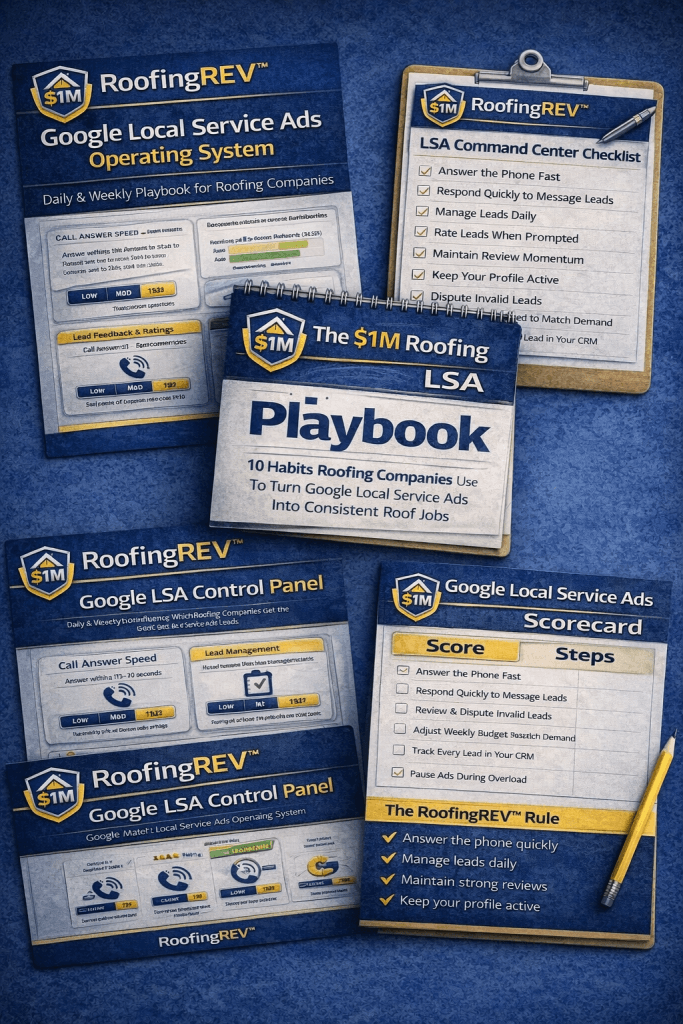
If you want predictable, high-quality LSA leads, you need a system—not guesswork. Download the full framework and see exactly how top roofing companies scale this channel.
FAQs
Do Google reviews directly affect Local Service Ads ranking?
Yes. Google reviews directly influence Local Service Ads ranking by affecting trust, visibility, and conversion rates. Consistent review velocity, strong ratings, and recent activity help your business appear more often and generate more leads.
Are GBP and LSA reviews the same now?
Yes. Google Business Profile and LSA reviews now operate as a unified system. All reviews contribute to your overall trust signal, meaning consistent review generation on your GBP directly impacts Local Service Ads performance.
How many reviews do you need to rank in LSAs?
There is no fixed number. You need enough reviews to stay competitive within your local market. Once that threshold is reached, consistent review velocity and recency have a greater impact than total volume.
Does review velocity matter more than total reviews?
Yes. Review velocity is often more important than total reviews. A steady flow of reviews signals consistent business activity, which Google prioritizes over businesses with large but inactive review profiles.
Is it bad to get multiple reviews on the same day?
It is not inherently bad, but it becomes a weak signal if followed by inactivity. Google favors consistent review patterns over spikes, so steady review flow is more effective for maintaining rankings and lead volume.
What star rating is required to stay competitive in LSAs?
Most competitive roofing companies maintain ratings between 4.7 and 5.0. Falling below 4.5 can significantly reduce trust, click-through rates, and lead volume, even if your ranking position does not immediately drop.
Do keywords in reviews impact Google LSA rankings?
Yes. Keywords in reviews help reinforce relevance. When customers mention services like roofing, repairs, or installations, it strengthens your alignment with search intent and can improve visibility in Local Service Ads.
How often should you be getting new reviews?
You should aim for a consistent flow of reviews weekly or daily, depending on job volume. The goal is to maintain steady activity rather than generating large bursts followed by long gaps.
Do responses to reviews affect rankings?
Yes. Responding to reviews shows engagement and professionalism. While it is a secondary ranking factor, it strengthens trust signals and can improve conversion rates, which indirectly supports better LSA performance.
Top 10 Google AI Search Changes for Roofers – September 2026
For roofing and exterior companies, recent changes across Google Search, AI results, Maps, Local Services Ads, and Google Business Profiles are affecting more than rankings. They are changing how homeowners discover contractors, research their options, make contact,...
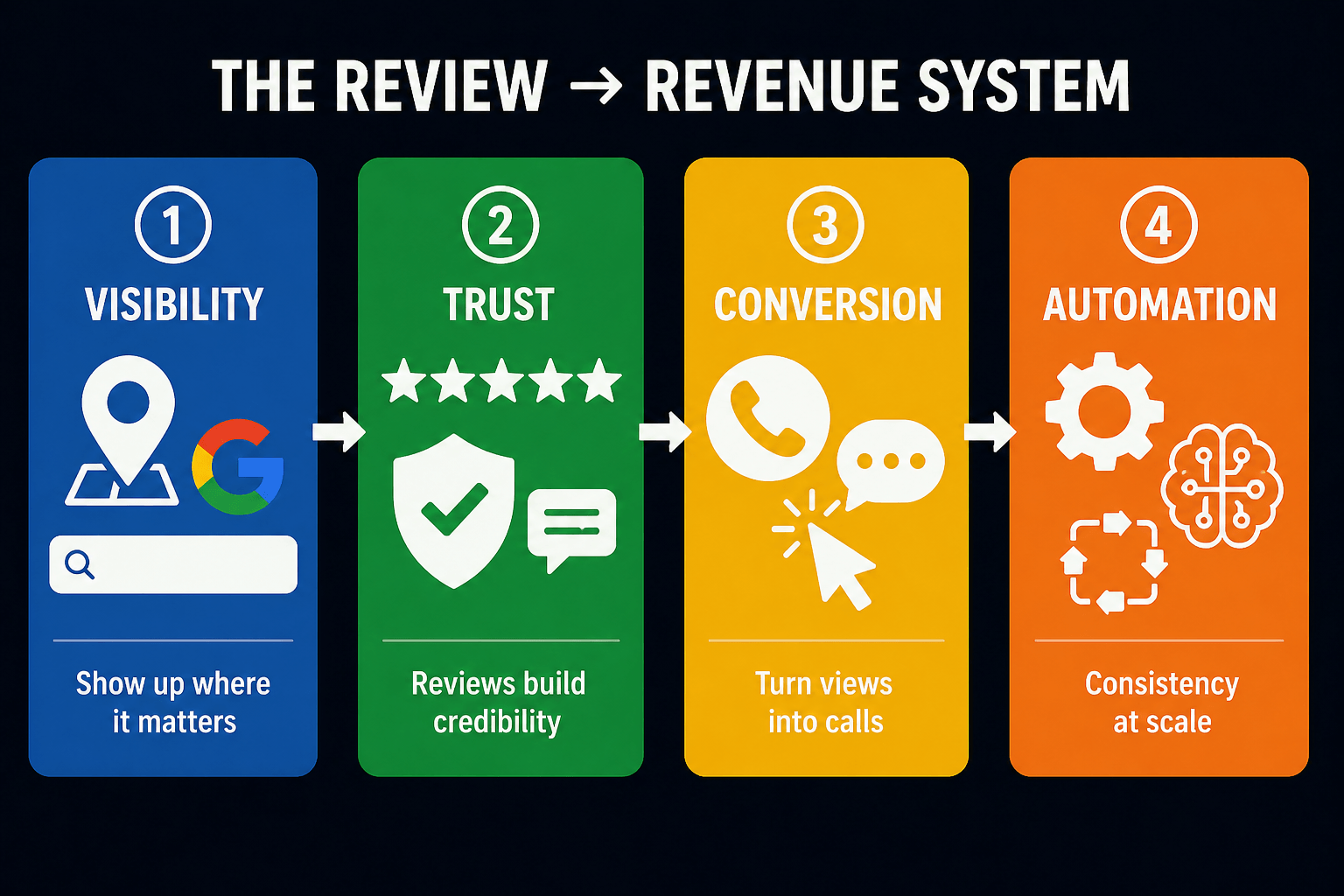
How AI Turns Roofing Reviews Into More Jobs
How AI actually turns reviews into roofing jobs is now one of the most important drivers of visibility, trust, and revenue for roofing companies competing in Google Maps, Local Service Ads, and AI search results. This guide is for roofing business owners and marketing...

LSA Budget for Roofers: Set It Right & Get More Leads
Your LSA budget doesn’t control how much you spend—it controls whether you get leads at all. For roofers using Google Local Service Ads, this is one of the most misunderstood parts of the platform. This guide is for roofing business owners and marketing managers who...