
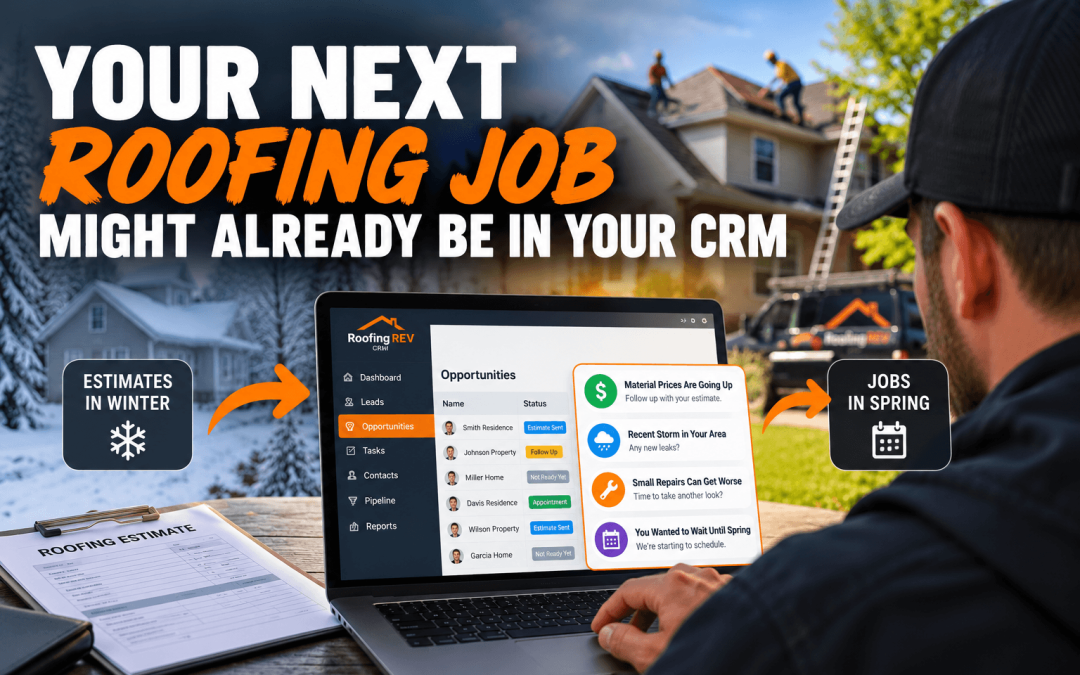
What if your next roof replacement didn’t require another Google Ad, another website visitor, or another new lead?
What if that customer is already sitting in your CRM?
Think about it. You’ve probably got people you never reached, estimates that went unanswered, customers who ghosted you, and others who told you, “Maybe next spring.”
You spent money generating those leads. Your team spent time talking with customers, evaluating roofs, and preparing estimates.
And then what happened?
Your next roofing job might come from an opportunity you’ve already paid for. Start with customers who never scheduled, estimates that weren’t approved, and projects postponed until a later date. Reconnect with a reason that’s relevant to their situation, then make sure somebody on your team can move that conversation toward an appointment.
Before you spend more money looking for new roofing customers, take a look at what you’ve already got.
An Unclosed Estimate Isn’t Always a Lost Customer
Not every customer who doesn’t buy from you is a lost customer.
Sometimes they weren’t ready to spend the money. Sometimes the weather changed. Sometimes they had another expense come up, or they decided to wait until spring.
And yes, sometimes they just ghosted you.
But here’s the question:
Did they actually hire somebody else, or did you just stop talking to them?
There’s a big difference.
Look back through your old leads and estimates. You’ll probably find people who never scheduled an appointment, customers who postponed repairs, estimates that went unanswered, and projects that never moved forward.
Commercial roofing companies might have projects waiting on budget approval, tenant coordination, or a better time to work around an occupied building.
Some of those opportunities are genuinely gone.
But others may still need a roofer. And unlike somebody who’s never heard of your company, these customers already know who you are.
That’s a pretty good place to start.
How We Helped Roofers Fill Their Spring Schedules
A few years back, we started looking more closely at the existing leads and estimates sitting in our roofing clients’ CRMs.
This was during the slower winter months here in the Midwest. December, January, February. Snow on the ground. Not exactly the busiest time for roof replacements.
But we were helping roofers fill their spring schedules.
People wanted to know, “What’s the secret sauce? How are you filling up spring when there’s still snow on the ground?”
It wasn’t some complicated AI automation.
We went back through the opportunities these companies had already generated, figured out what happened with those customers, and started reconnecting.
And here’s what’s interesting. They weren’t all the same kind of roofing job.
Some customers wanted to commit to a replacement ahead of time to lock in pricing.
Others needed temporary tarping to protect their property, with the actual roofing work scheduled for later.
Some had put off repairs, but their leaks got worse or new leaks started appearing.
Others were working through insurance-related roofing projects.
Different customers. Different situations. Different reasons to move forward.
But the opportunities were already there.
We weren’t starting from zero or waiting for the phone to ring.
We used simple text messages, emails, and follow-up conversations to find out what had changed and whether those customers were ready for the next step.
Real Results: 66% Growth and More Than Double the Roof Jobs
Here’s a real example from one of our roofing clients.
During the first four months (January-April) of 2026, Elevated Roofing increased revenue by approximately 66% compared with the same period in 2025.
Their roof jobs sold more than doubled, going from 18 to 40.
Now, I want to be clear. Several things contributed to that growth.
We were also refining their marketing to focus on better-fit customers, higher-income service areas, higher-value roof replacements, and more profitable repair opportunities.
But here’s something the owner of Elevated Roofing specifically pointed out to us.
Some of the roofing jobs they sold in March and April 2026 came from customers they’d evaluated, tarped, and quoted between December 2025 and February 2026.
Think about that.
It’s January in the Midwest. There’s snow on the ground. A customer gets a roofing estimate but isn’t ready to move forward.
If you’re judging that lead strictly by whether it became a sale that month, you might consider it a failure.
But that same customer could become a roofing job in Spring.
Just because a roofing lead didn’t close during the month it came in doesn’t mean it was a bad lead.
That’s why staying in touch matters.
And this isn’t just about winter. Roofing projects can have longer buying cycles for all kinds of reasons.
The question is whether you’re staying in the conversation or letting those opportunities disappear.
You can see more examples of how we approach roofing growth in our roofing marketing success stories.
Five Reasons to Reconnect With Past Roofing Leads
Here’s where a lot of roofers get follow-up wrong.
They think following up means sending somebody another message asking, “Are you ready to buy yet?”
Then they send basically the same message next week.
Why would the customer respond this time?
Give them a reason.
Here are five follow-up opportunities that can turn an old roofing lead into a new conversation.
1. Material Prices Are Going Up
If you’re expecting a verified increase in roofing material costs, that’s a legitimate reason to reconnect with customers who have been sitting on estimates.
Something like:
“Hey Mike, we’re expecting an increase in material pricing. If you’re still planning that roof replacement, we can revisit your estimate and see whether locking in today’s pricing makes sense.”
You’re not just asking for the sale. You’re giving the customer a reason to make a decision.
Of course, only make that offer if the price increase is real and you can actually honor the pricing you’re offering.
2. Heavy Rain or Severe Weather Just Came Through
You gave somebody an estimate last fall. They decided to wait.
Now you’ve had a few days of heavy rain.
Why not reach out?
“Hey Sarah, we had some pretty heavy rain recently. Have you noticed any new leaks or water stains since we last looked at your roof? If so, we can schedule another evaluation and check for signs of moisture in the attic.”
Maybe nothing has changed.
Or maybe that customer has a new problem and needs somebody they already know.
3. A Small Roof Repair Could Become a Much Bigger Expense
This is one people tend to underestimate.
Let’s say you quoted somebody a $700 roof repair. They decided to put it off.
Now moisture continues getting into the property.
That relatively small repair could turn into something much more expensive if you start dealing with wet insulation, damaged drywall, rotted decking, or mold-related problems.
Not every delayed repair escalates like that. But it can happen.
And that’s a good reason to check in with a customer before the situation gets worse.
You’re not trying to scare them. You’re reminding them why the repair was recommended in the first place.
4. A Hailstorm, Tornado, or High-Wind Event Damaged the Area
After a significant storm, you have a legitimate reason to reconnect with customers who previously had roofing concerns.
But don’t just send a message saying, “We do storm damage roofing.”
Give them something useful.
Remind them to stay off the roof, document visible damage from a safe location, and contact their insurance company about the claims process if appropriate.
If there’s active water intrusion, temporary protection such as tarping may be needed once conditions are safe.
You can offer to evaluate the roof and document what you find.
That’s the kind of communication people remember because you’re helping them figure out what to do next.
5. The Customer Wanted to Wait Until Spring
This might be the easiest opportunity of all.
They already told you when they wanted to revisit the project.
So why aren’t you contacting them?
“Hey John, when we spoke last fall, you mentioned wanting to wait until spring for your roof replacement. We’re starting to schedule upcoming projects. Would you like us to revisit your estimate and look at available dates?”
Simple.
And for commercial customers, the same idea applies.
Maybe the building owner needed a new budget approved. Maybe a property manager had to coordinate with tenants. Maybe a distribution center couldn’t afford interruptions during its busiest season.
If you know what delayed the project, you have a much better reason to follow up.
Stay Top of Mind Without Becoming Annoying
Here’s the difference between staying top of mind and becoming a nuisance.
One gives the customer something useful. The other just keeps asking for the sale.
You don’t have to send 15 emails or build some elaborate AI follow-up system.
Sometimes it’s two or three touches by text or email. Sometimes a phone call makes more sense.
And not every message needs to be about booking a roof replacement.
You can share advice about storm damage, remind someone about a repair they postponed, or check whether the circumstances that delayed their project have changed.
The important thing is to remember what the customer told you.
If somebody said they needed to wait until the new year for budget approval, don’t send them the same message you send somebody who has an active roof leak.
That’s where having even a basic CRM makes a difference.
You can see who requested an estimate, who postponed a project, who needs a follow-up, and what happened during the last conversation.
For example, a basic roofing sales pipeline might look like this:
| Step | Stage |
|---|---|
| 1 | New Lead |
| 2 | Contacted |
| 3 | Appointment Scheduled |
| 4 | Appointment Completed |
| 5 | Estimate Sent |
| 6 | Followed-Up |
| 7 | Won |
| 8 | Lost |
Every roofing company operates a little differently, so your stages may vary.
And you don’t need to create separate stages for SMS 1, Email 1, Call 1, SMS 2, and so on. Use tasks and reminders for those activities.
The pipeline tells you where the customer stands. The follow-up keeps the relationship moving.
One more thing: Getting a reply isn’t the finish line.
Someone on your team needs to respond, answer questions, and get the appointment scheduled when the customer is ready.
Otherwise, you’ve just found another way to lose the same lead twice.
And as always, respect customers’ communication preferences and opt-outs.
Your Existing Leads Can Be More Profitable Than Buying New Ones
Here’s something else to think about.
You’ve already paid to generate these opportunities.
Maybe that customer came through Google Ads, Local Services Ads, SEO, or another marketing channel. Maybe you also spent time driving out to the property, evaluating the roof, and putting together an estimate.
That money and time have already been invested.
So when you reconnect with an existing customer and turn that opportunity into a roofing job, you may not need to spend more on advertising to generate that particular opportunity.
Now, that doesn’t mean follow-up is free. Your team’s time still costs money.
But getting more jobs out of opportunities you’ve already generated can improve the return on your original marketing investment.
Why spend all your energy bringing new customers in the front door while ignoring the ones who have already walked through it?
I’m not saying stop generating new leads.
I’m saying stop treating every lead that doesn’t immediately close as a wasted opportunity.
And that doesn’t mean you should automatically shut off your advertising when winter arrives, either. We recently discussed when roofers should keep advertising during winter, cut back, or temporarily pause their ads. The right answer depends on demand, your available crews, and the kinds of jobs you’re trying to book.
You need both new customer acquisition and a way to stay connected with the customers you’ve already reached.
That’s especially important during the slower roofing months, when you may have more time to reconnect with old estimates and start filling your spring calendar.
For additional ideas, check out our slow-season marketing strategies for roofers.
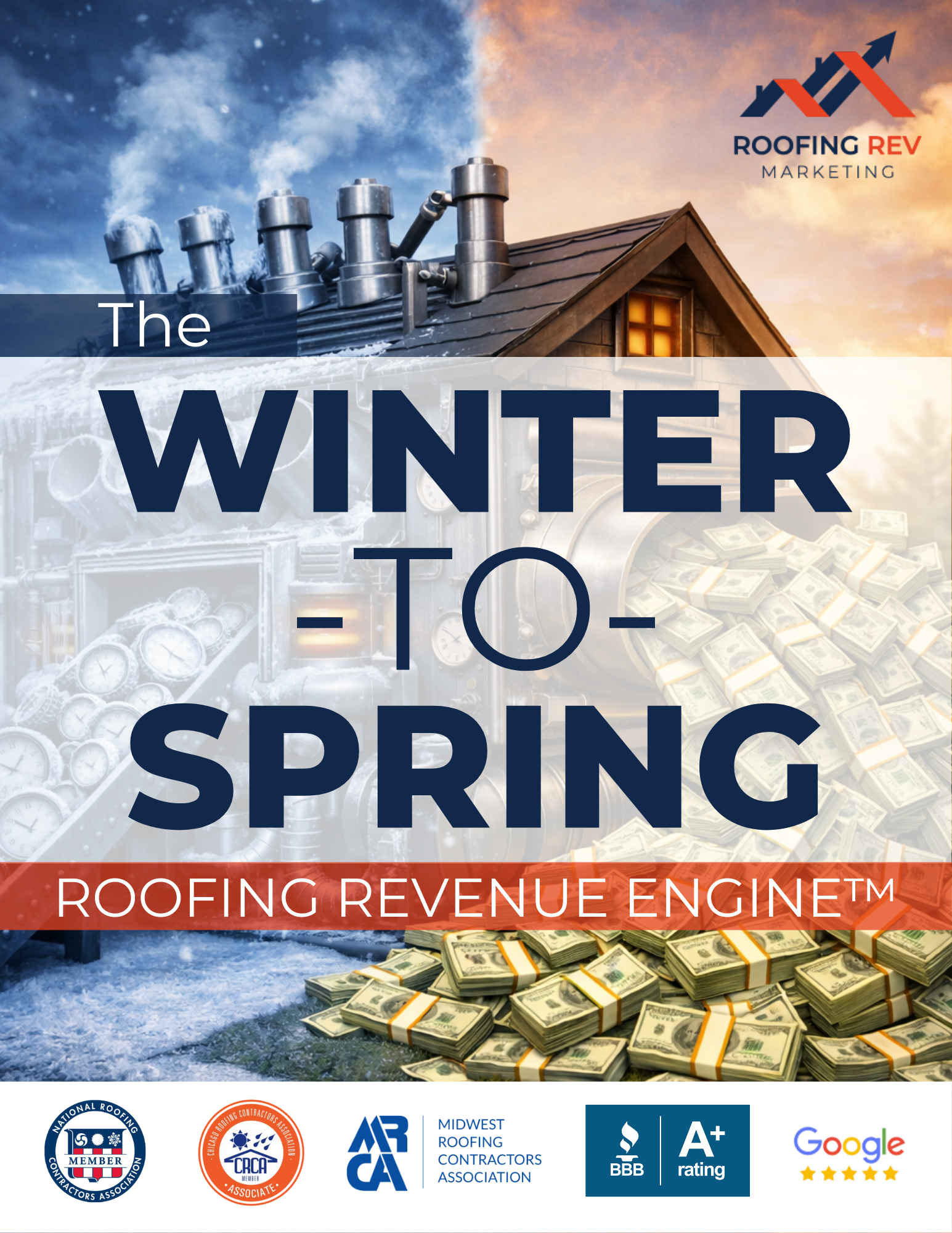
We also put together a free Winter-to-Spring Roofing Revenue Engine™ with training modules and worksheets to help roofing companies prepare for the next season.
Don’t Overcomplicate It. Play Small Ball.
I’m a baseball guy, so here’s how I look at it.
You’re not going to hit a home run every time you step up to the plate.
Sometimes it’s small ball.
One hit, one base. Then another. Then another.
Same thing with roofing sales.
One follow-up turns into a conversation. That conversation becomes an appointment. The appointment becomes a roofing job.
Not every customer will respond. Not every estimate will close.
But those smaller wins add up.
You don’t always need a new lead. Sometimes you need to do something with the ones you already have.
Don’t sleep on your CRM.
Don’t Have a CRM? Get Started With Roofing REV CRM for Free.
If you’re still tracking leads through spreadsheets, emails, notebooks, or your salesperson’s memory, how does the rest of your team know what’s happening?
What happens when somebody’s out sick, on vacation, or leaves the company?
You don’t need a complicated or expensive system to get started.
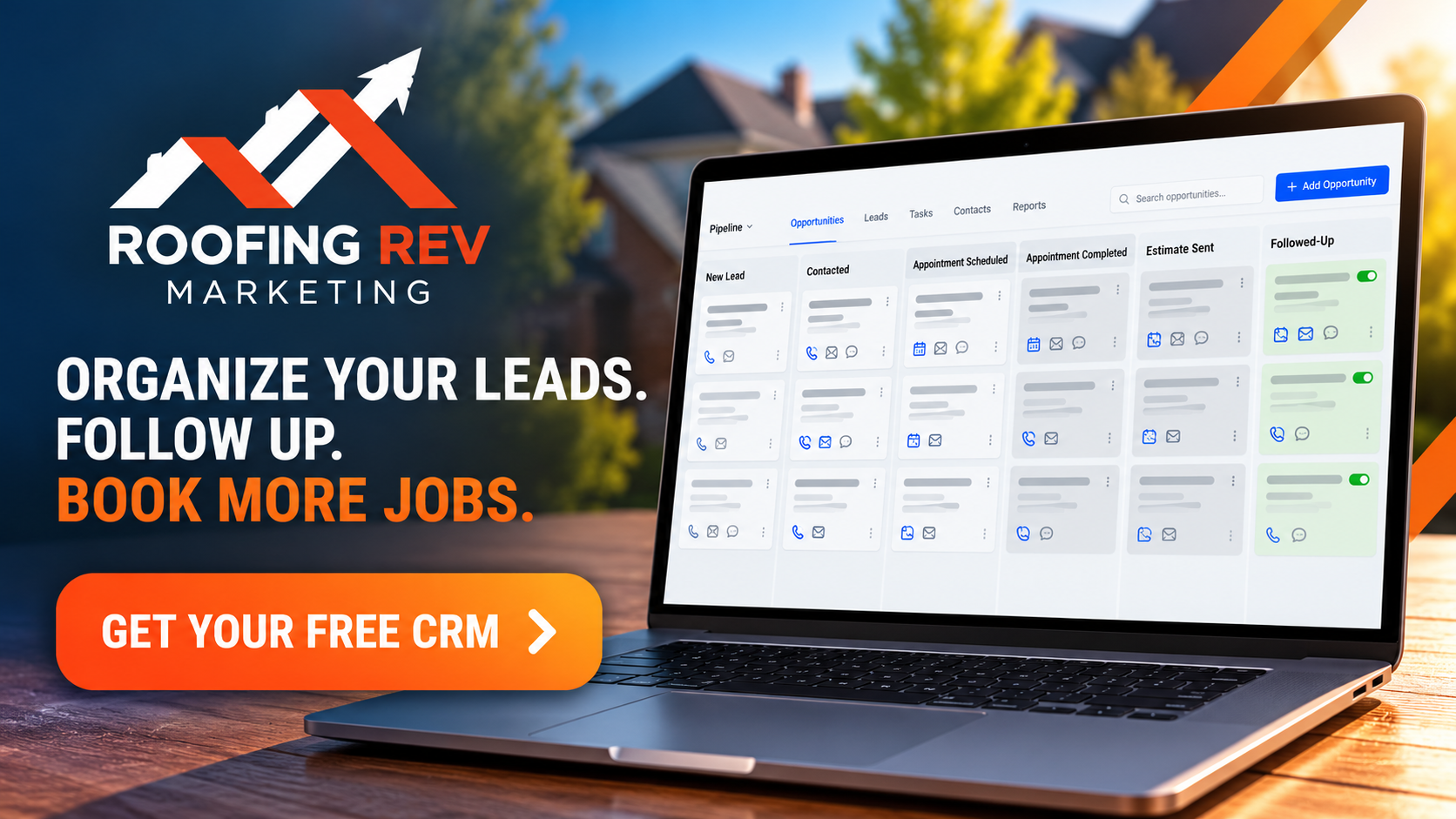
Roofing REV CRM is free for up to 1,000 contacts, with unlimited team members.
It gives your team a central place to manage leads, estimates, appointments, and follow-ups, with basic pipeline automations to help keep opportunities moving.
You can start getting organized without paying for another piece of software.
And if you don’t have a CRM today, something is better than nothing. Getting everyone on the same page can be a game changer for your roofing business.
Your next roofing job might already be sitting there. Go find it.
About the Author:
Carm Taglia is CEO of Roofing REV Marketing, a family-owned marketing agency specializing in helping roofing companies generate qualified leads, book more jobs, and grow revenue. With more than 25 years of experience in advertising, sales, and business development, Carm brings a practical, business-owner perspective to roofing marketing.


Should Roofers Cut Advertising During Winter?
Should roofing companies cut their advertising during the slower winter months? Our answer is generally NO. But that doesn't mean you should keep spending the same amount of money, advertising the same services, or targeting the same customers. I'm Chris Taglia, and...

Google’s AI Is Calling Roofing Companies: Here’s How to Respond
Google's AI is no longer just helping property owners find roofing companies. It's now making phone calls on their behalf, asking questions about services, pricing, and availability. One of our roofing clients recently received one of these calls, and it revealed a...
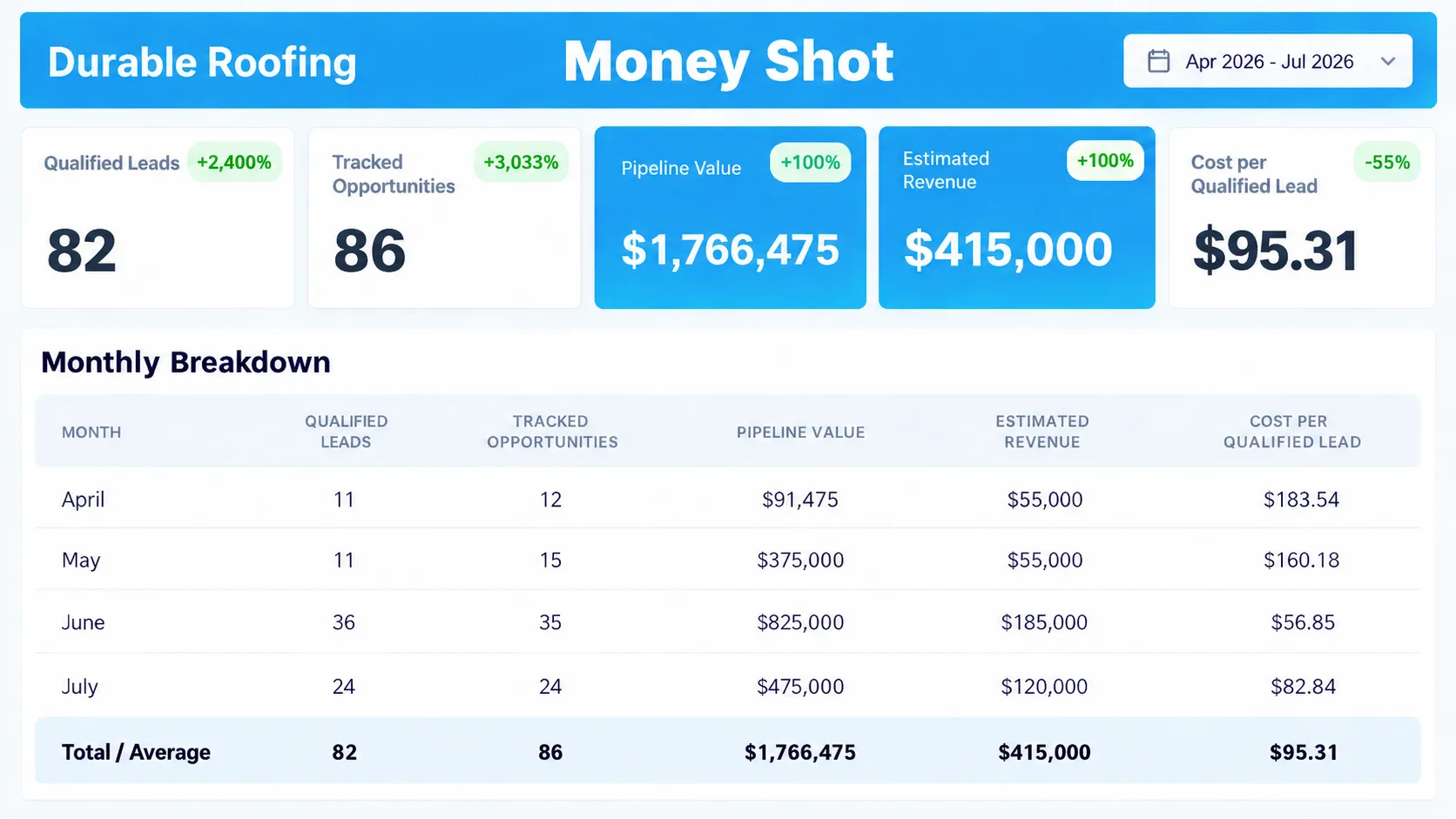
Durable Roofing Generated 82 Qualified Leads Within First 4 Months
Durable Roofing Generated 82 Qualified Leads Within First 4 Months That’s $1.77 Million in Pipeline Value!View More Success Stories > Durable Roofing Generated 82 Qualified Leads Within First 4 MonthsDurable Roofing is a fourth-generation roofing company with more...